


Schneider

Original price was: 1.499,50 EGP.1.350,90 EGPCurrent price is: 1.350,90 EGP.
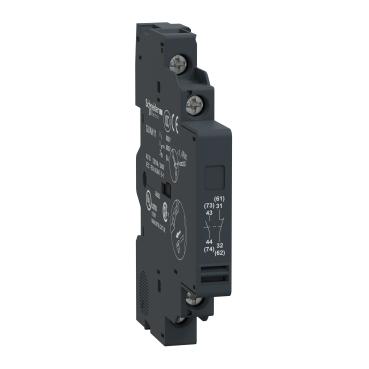
Comprehensive guide to Schneider GVAN side auxiliary contacts: electrical and mechanical architecture, integration with GV2 and GV3 breakers, and real-time monitoring
Introduction to auxiliary contact systems and motor protection breakers
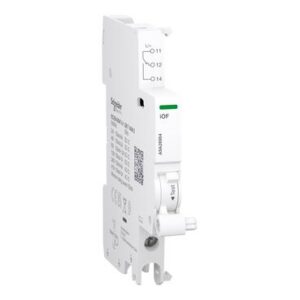
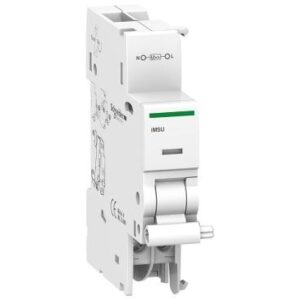
In industrial automation and modern control-panel design, real-time monitoring of machines and breakers is important for production continuity and fault detection. Large induction-motor systems require auxiliary devices that accurately report operating status to control rooms and PLC systems. The Schneider Electric GVAN Auxiliary Contact Block is designed to work with TeSys GV2 and GV3 Motor Circuit Breakers. Mounted on the side of the breaker, it reports states such as ON, OFF, or Trip and can send signals to controllers, indication circuits, and alarm systems.
Electrical and mechanical architecture of the GVAN unit
Side mounting compatible with the TeSys GV2 and GV3 family
The GVAN uses a compact, lightweight mechanical housing designed to interface with GV2 and GV3 motor circuit breakers. A side-mounted mechanical linkage transfers breaker-handle movement to the internal contacts, providing prompt correspondence between the actual breaker position and the electrical status signal.
Please sign in to submit a product report.
- Description
- Reviews
Description
Comprehensive guide to Schneider GVAN side auxiliary contacts: electrical and mechanical architecture, integration with GV2 and GV3 breakers, and real-time monitoring.
Dual normally open and normally closed contact arrangement (NO/NC)
The unit contains conductive contact elements designed for repeated mechanical and electrical operation. Depending on the model, contacts may include Normally Open – NO and Normally Closed – NC arrangements, giving control engineers flexibility for interlocking (Interlocking), pilot-light indication, alarms, or AC/DC control signals.
Signal-transfer mechanisms and integration with automation systems
Monitoring operating states and immediate status feedback
The GVAN follows the principal states of the associated breaker, including normal ON operation, intentional manual OFF, and a Trip caused by faults such as overload or short circuit. This allows the motor status to be monitored and helps operators identify shutdown conditions quickly for maintenance and troubleshooting.
Integration with programmable controllers (PLCs) and alarm circuits
Side auxiliary contacts act as an interface between electromechanical equipment and digital control systems. By connecting GVAN signals to controller inputs, a PLC can perform actions such as stopping a production line, activating an audible alarm, or displaying a fault message on an HMI.
Insulating-body engineering and safe connection standards
Treated, vibration-resistant plastic enclosure
The GVAN housing uses engineering polymers intended to withstand mechanical vibration associated with motor installations. The material also provides insulation and helps protect the internal mechanism against temperature variation and normal industrial service conditions.
Screw terminals and secure fastening standards
The unit includes screw terminals designed for the small and medium conductors used in control circuits. Correct tightening helps keep wires secure under vibration, reduces intermittent monitoring signals, and supports stable control-panel operation.
Technical specifications and functions table
| Technical specification | Primary function | Practical benefit to the user |
|---|---|---|
| Full compatibility with TeSys GV2& GV3 | Direct mechanical side mounting on motor protection breakers. | Simple installation without complex tools or additional panel space. |
| Auxiliary contacts (NO / NC) | Provide alternative electrical paths for indication and control circuits. | High flexibility for designing alarm and electrical interlocking circuits. |
| Vibration-resistant polymer housing | Protects internal components and supports stable mechanical mounting. | Helps extend unit service life in demanding industrial environments. |
| Secure screw terminals | Securely fasten small control-circuit wires and reduce loosening. | Supports uninterrupted monitoring-signal continuity. |
| Real-time breaker status transfer (ON/OFF/Trip) | Immediately informs control systems of operating or fault status. | Faster fault identification and reduced production-line downtime. |
Objective advantages and limitations
Key advantages:
Precise engineering integration: direct side mounting on Schneider breakers provides an organized installation and conserves panel space.
Reliable signal transfer: quality contact materials support stable and accurate electrical signaling over repeated operating cycles.
Wide operating flexibility: multiple normally open and normally closed contact combinations support different control-panel requirements.
Strong mechanical durability: designed to tolerate vibration and normal industrial conditions without compromising operation.
Limitations and objective disadvantages:
Limited current capacity: intended only for low-current signaling and control circuits, not for directly supplying heavy loads.
Accurate installation required: correct side mounting and mechanical engagement with the breaker handle are necessary for reliable operation.
Suitable and unsuitable applications
Ideal applications:
Automated control panels for induction motors in factories and production lines, where operating and stopped status must be monitored.
Visual and audible alarm circuits that indicate a fault or motor-breaker trip.
Connecting motor protection breakers to programmable controllers (PLCs) and supervisory systems (SCADA).
Critical facilities requiring immediate knowledge of machine shutdown causes to reduce process interruption.
Unsuitable applications:
Not intended for directly switching main loads or motors because the auxiliary contacts are not rated for high current.
Not intended for installation on breakers from other manufacturers unless mechanical compatibility with the Schneider TeSys mounting system is specifically confirmed.
Safe operation and installation method
Complete electrical isolation: disconnect the panel main supply and verify absence of voltage with an approved test instrument before starting work.
Prepare the breaker and unit: place the motor protection breaker (GV2 or GV3) in the OFF position and prepare the GVAN auxiliary contact unit.
Mechanical side engagement: insert the GVAN into the designated side-mounting path until fully seated and make sure the mechanical transfer mechanism engages correctly.
Connect the control wires: securely connect the indication-circuit wires to the designated screw terminals (NO or NC), then test the circuit.
Important safety warning: never pass main power currents through auxiliary contacts intended for control. Use them only within their specified low-current control and signaling ratings.
Maintenance, cleaning, and extending service life
Periodic wire inspection: regularly check screw and terminal tightness to prevent loosening caused by continuing vibration.
Dry panel cleaning: keep the area around the unit clean and free of dust and oil, using compressed air carefully and without wet cleaning fluids.
Signal-efficiency test: regularly verify the indication and control circuits to ensure the contacts report breaker status accurately without delay or intermittent operation.
Important advice before purchase
Check model compatibility: confirm that your motor protection breaker belongs to the Schneider TeSys GV2 or GV3 family to ensure correct side-mount compatibility.
Determine the required contact type: identify the number and type of contacts, normally open or normally closed, required by your control circuit before purchase.
Use genuine products: choose an original approved GVAN unit to support manufacturing quality, compatibility, and reliable operation.
Comprehensive conclusion
The Schneider GVAN side auxiliary contact unit is a useful addition to control panels that require breaker-status monitoring and integration with motor-control systems. Its compatibility with TeSys GV2 and GV3 breakers, reliable contact mechanism, and vibration-resistant housing support prompt transfer of breaker status to alarms and controllers. Correct selection, installation, and use of genuine parts help improve fault detection, operational continuity, and overall control-system safety.
Show only reviews in English (0)
Be the first to review “Schneider”
You must be logged in to post a review.
Product Questions & Answers
No questions yet. Ask the supplier about specifications, compatibility, certifications or installation requirements.

Reviews
There are no reviews yet.