Electric socket
Electric socket Types, composition and safety standards Contents History of Electricity Prize Types of electrical sockets Electrical socket standards Safety standards How to install an electric socket Basic tools for installing an electrical socket What is the difference between socket and plug?…
Electric socket
Types, composition and safety standards

Contents
An electrical socket , also known as an electrical outlet or plug, is an item that provides a power connection between an electrical device and an electrical source. It is usually installed in the wall and connected to a power source such as a generator, transformer, or battery. Brize Electric provides a safe and convenient way to connect devices to electricity, such as TVs, computers, smartphones, and more. Electrical sockets come in different types, shapes and sizes, and play an important role in ensuring the safety and reliability of electricity supply in our homes, offices and public places.
History of Electricity Prize
Electric braziers date back to the late 1800s when electricity was first introduced for use in homes and businesses. Over time, electrical socket design has evolved to become more user-friendly and safer, with developments such as the introduction of polarized sockets, specialized sockets for heavy appliances, and remote-controlled smart sockets. The integration of USB ports into electrical sockets has also made it easier to charge devices. The future of electric chairs is expected to evolve in terms of the design and functionality of other types as the demand for reliable and safe electricity continues to grow.
Types of electrical sockets
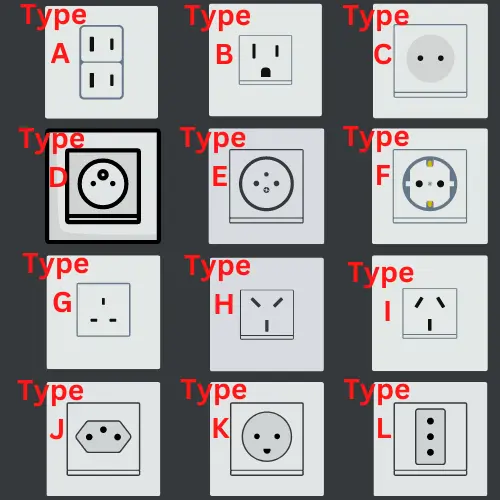
There are different types of electrical sockets available in the Arab markets, each designed to meet special needs and requirements. It is important to choose the appropriate socket type for the specific electrical device to ensure safety and reliable performance. Some of the most common types include:
NEMA 5-15 : The most common type of electrical outlet, also known as a standard wall outlet or standard plug, has two holes and is used for most standard electrical appliances.
NEMA 5-20 : A heavy-duty electrical receptacle designed to handle high-powered electrical devices, and has two slots and a third prong for grounding.
NEMA 6-15 : Designed for heavy-duty appliances, it has three slots and is able to handle up to 240 volts .
NEMA 6-20 : A high-power electrical receptacle similar to a NEMA 6-15 receptacle , but with a higher current rating of 20 amps .
NEMA 14-50 : A heavy-duty electrical outlet designed for use with high-power electrical appliances such as air conditioners, refrigerators, and washing machines. It has four slots and is capable of handling up to 50 amps .
NEMA L5-30 : An electrical receptacle commonly used for generators, with two holes and a third prong for grounding.
GFCI (NEMA 5-15R) Ground Circuit Interrupter Receptacles : Designed to provide additional safety by detecting any current leaks and immediately cutting off the power to prevent electrical shock. They are usually found in bathrooms and kitchens.
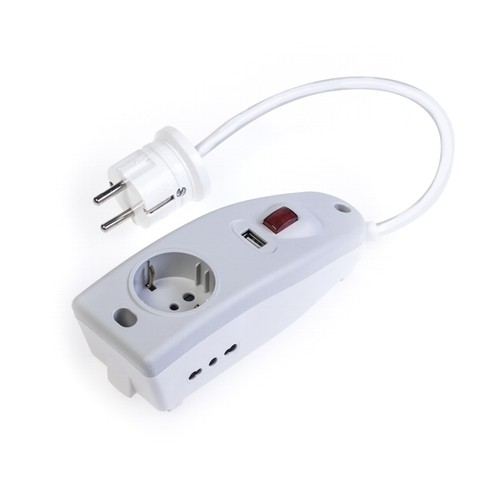
USB Outlets : Electrical sockets with built-in USB ports , allowing users to charge devices directly from the wall.
Smart Plugs : Outlets that can be controlled and monitored remotely through a smartphone or other connected device.
Electrical socket standards
Standards for electric luggage vary from country to country, and this can pose a problem for travelers who use electronic devices. In Arab countries, the most common electrical plug standard is the Type C plug , also known as the Europlug or CEE 7/16 plug . This standard is widely used in many countries in Europe and Asia as well and is compatible with the CEE 7/16 socket . The Type C plug has circular pins and is suitable for devices with low power consumption, such as chargers and small electronics.
Some Arab countries may also use other standards for electrical outlets, such as type D , type G , and type M , specific to certain countries. Travelers to foreign countries should check the electrical socket standard in the specific country they are visiting and bring the appropriate adapter if necessary.
Safety standards
When installing an electrical outlet, it is important to follow safety standards to ensure that the installation is safe and complies with local electrical codes. Some key safety considerations when installing an electrical outlet include:
- Turn off the power.
- Use the appropriate tools.
- Secure the electrical box properly.
- Use the appropriate wire size.
- Connect the wires correctly.
- Be careful not to contact the wires.
- Use a wall plate.
- Consult a licensed electrician.
How to install an electric socket
An electrical outlet can be installed with some basic knowledge of electrical wiring and safety precautions. Here’s a step-by-step guide to installing an electrical outlet:
1. Before starting any electrical work, be sure to disconnect the power connector from the circuit you will be working on.
2. The second step is to locate the circuit breaker panel.
3. Remove the old socket using a screwdriver and gently pull it out of the wall.
4. Install the new electric socket.
5. Connect the outlet wire, black and white wires to the appropriate terminals of the outlet.
6. Then connect the wires to the screws on the side of the socket and tighten the screws into place.
7. Make sure the socket is level and flush with the wall.
8. Turn on the power to the circuit via the electrical breaker .
9. Finally, test the new socket to make sure it is working properly (ignition and extinguishing via the switch).
Electrical work can be dangerous, and it is recommended to use a licensed electrician if you are not familiar with the installation process. In addition, you should have the tools necessary to carry out any repair or installation.
Basic tools for installing an electrical socket
- screw driver.
- Wire cutter.
- Voltage tester.
- Electrical tape.
- Electrical socket.
- Electrical box.
- Wall panels.
What is the difference between socket and plug?
A socket refers to the female end of an electrical connection. A socket is usually attached to a wall or other fixed surface and provides a connection point for the plug, while a plug refers to the male end of an electrical connection. It is the item that is attached to the end of the electrical wire and is inserted into the plug. (Praise) To make an electrical connection to a computer, printer, or other network device, and provide a connection point for the jack. The power lines that run from plug to plug are referred to as live and neutral wires.
If you have any inquiry, please contact us freely and we will be happy to serve you.

Jezli website for purchasing electrical appliances
When we say Jeezly website, we are talking about one of the most famous Arab websites that was able, in a very short period of time, to achieve a very large demand for purchases from it by people from various parts and sectors of the Arab world.
On the Jeezly website, you will find a joint look and all the products that you may need in your home, starting with those for kitchens or bathrooms, but even those for gardens, you will find them on this wonderful site.
So, if you were lost before and did not know where to go to buy your products on the Internet, now you have the perfect solution, and all you have to do is go to the Jezli website and start choosing the products you want.
 What are the features of Jeezly ?
Since we are talking about a site that is preferred by many people around the world, there is no doubt that it is a site full of various features and characteristics. Therefore, we have decided to devote our next paragraph to pointing out the most prominent features of the Jezli site.
One of the most prominent features of the site is the proportionality of prices. On the Jeezly website, you do not have to worry about the imaginary prices of the products, as is the case with most sites that display their products on the Internet.
The price of delivering products is very reasonable and not expensive, and the site accepts delivery to various countries, without forgetting that it accepts free shipping on some products.
One of the advantages of the site is also the high quality of its products, as it is impossible to find a poor quality product. Rather, the Jezli website deals with major companies, Philips, for example, and other famous brands, so you must remove from your mind the idea of the poor quality of one of the products. Another advantage of the site is that it does not specialize in one type of product, but rather you will find various types of products on it, for example, electrical appliances, hand tools, mechanical devices, paints, packages for establishing apartments, and many other types.
Jeezly website also accepts what is known as the shopping cart, which makes it easy for you to filter the products you want to buy and put them in one package in order to be able to pay with the click of a single button.
Accepts multiple payment methods.

We are pleased that you visit our social media pages, where we publish exclusive offers on our website.
Our Facebook page is here .
Our Twitter account is here .