


Schneider

Original price was: 6.970,17 EGP.6.279,43 EGPCurrent price is: 6.279,43 EGP.
Comprehensive guide to Schneider Electric Harmony XB4 / XB5 potentiometers: electrical and physical architecture, precise analog control, and industrial automation
Introduction to variable resistors and analog control devices in industrial panels
In modern electrical systems and industrial automation, precise analog adjustment of speed, reference values, and process variables can provide simple local control without complex software changes. Industrial environments require manual control elements with stable operation, resistance to wear, and accurate variable-signal output. Schneider Electric Harmony XB4 / XB5 potentiometers provide local analog adjustment for control panels and automation systems. Typical applications include speed reference for VFD Inverters, temperature setpoint adjustment, and other analog reference signals.
Electrical and physical architecture of Schneider Harmony XB4 / XB5 potentiometers
Compact architecture combining analog and mechanical technologies
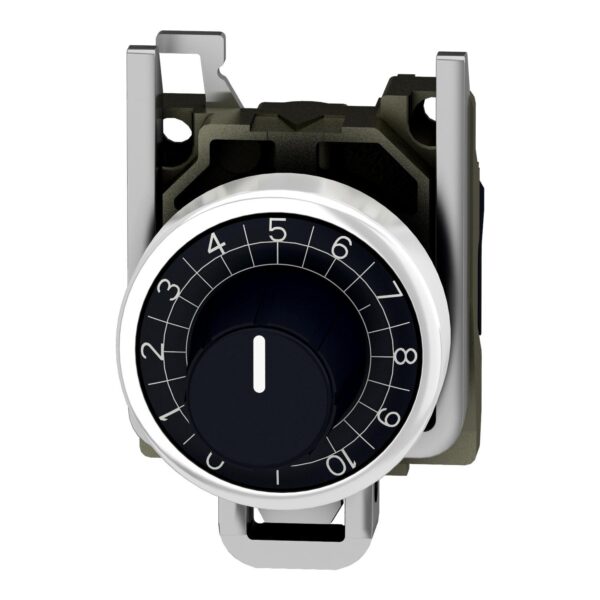
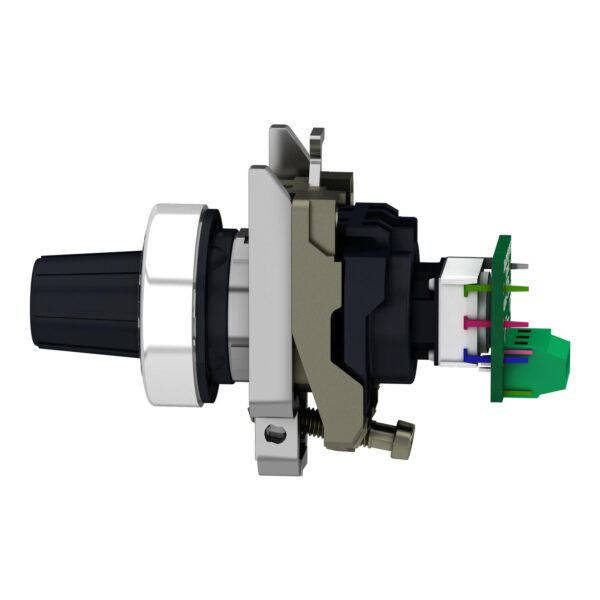
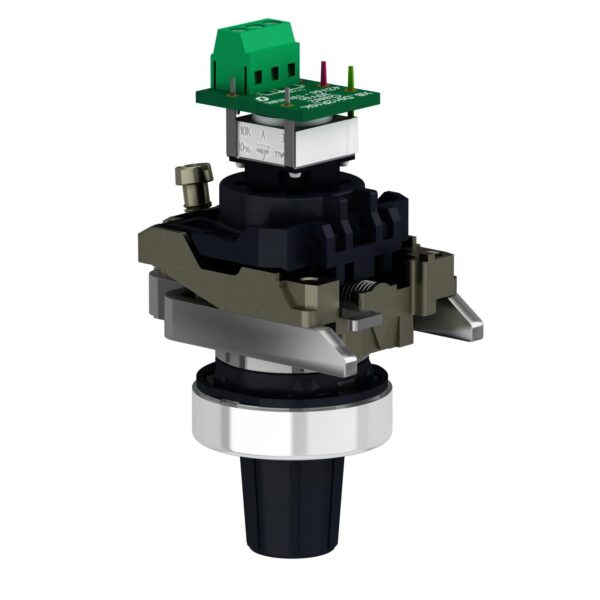
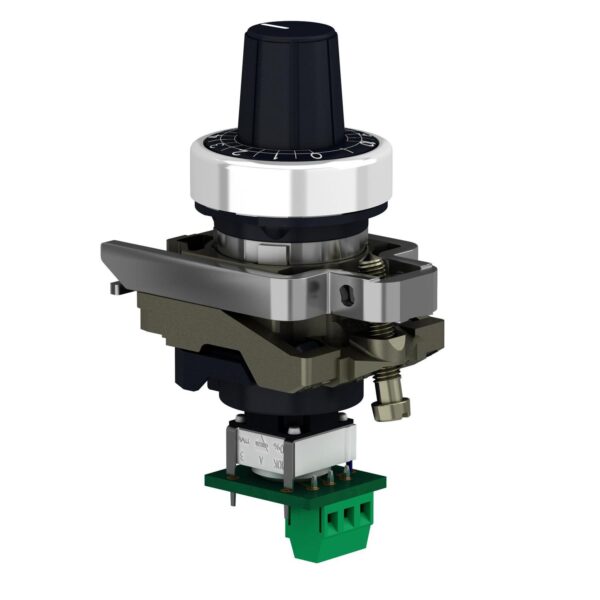
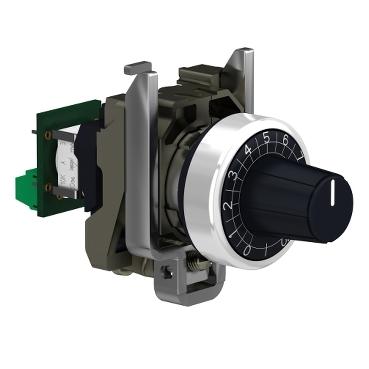
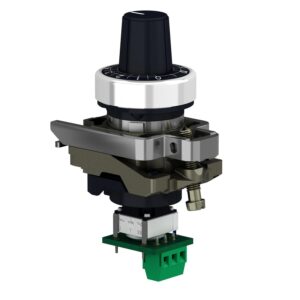
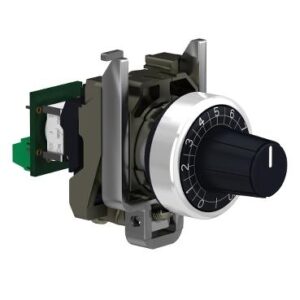
Schneider Harmony XB4 potentiometers use a metal operator architecture, while XB5 versions use a durable plastic construction. Internally, the device combines a precision resistive track with a rotary shaft designed for repeated manual operation. Rotating the knob changes the electrical resistance smoothly, allowing a corresponding analog reference signal to be sent to control equipment.
Internal resistance and high thermal stability
The internal design uses carefully calibrated resistive elements with low tolerance and a low temperature coefficient, helping keep the output value stable despite heat generated during continuous operation inside enclosed electrical panels. This thermal stability reduces unwanted variation in motor speed or industrial process setpoints and supports overall system reliability.
Please sign in to submit a product report.
Technical specifications
A single structured view of reviewed Product Entry data and canonical WooCommerce specifications.
- قيمة المقاومة
- R10K، R100K
- Description
- Reviews
Description
Comprehensive guide to Schneider Electric Harmony XB4 / XB5 potentiometers: electrical and physical architecture, precise analog control, and industrial automation
Control of VFD Inverters and analog applications
Direct integration with variable-frequency drives (VFD Inverters)
The Schneider potentiometer can be connected to analog inputs such as 0-10V or, through suitable interface modules, 4-20mA on variable-frequency drives and VFD Inverters. This allows operators to adjust induction-motor speed manually and smoothly from stop to the required operating speed, subject to the drive configuration.
Control of reference signals and variable processes
In addition to speed control, the potentiometer can be used to adjust Setpoints for temperature-control systems, flow rates, pressure, and other industrial processes that require continuous manual analog adjustment.
Mounting engineering and compliance with Harmony family standards
Standardized mounting system and protected terminals
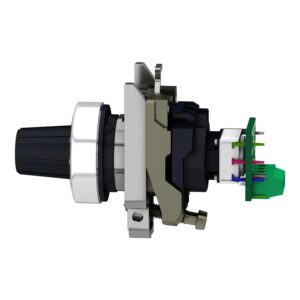
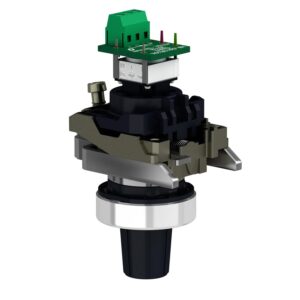
The potentiometer units belong to Schneider Electric’s Harmony family and are designed for installation through standard 22 mm panel-door openings. The operator is secured from the rear, while protected connection terminals help prevent accidental contact and provide reliable conductor clamping.
Clear scale markings and ergonomic knob
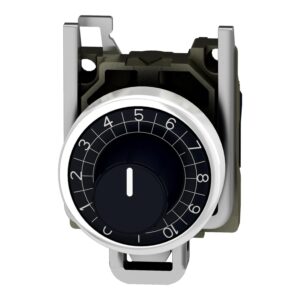
The device uses a rotary knob designed for comfortable manual adjustment, together with a clear graduated scale, often marked from 0 to 100%, so the operator can visually identify the selected setting.
Technical specifications and functions table
| Technical specification | Primary function | Practical benefit to the user |
|---|---|---|
| Harmony family (XB4 / XB5) | Provides either a metal operator construction or a durable plastic version. | Strong mechanical resistance and compatibility with standard panel designs. |
| High-precision analog resistive track | Converts rotary movement into a controlled change in resistance. | Provides smooth, stable adjustment of speed and reference signals. |
| Direct compatibility with (VFD) control applications | Sends analog reference signals for motor frequency and speed control. | Reliable manual control of motor speed and other analog functions. |
| Standard mounting hole (22 mm) | Simple installation in standard control-panel door openings. | Reduces assembly time without requiring special mechanical modification. |
| Protected tunnel-type terminals | Secure signal-wire clamping and reduced risk of loosening. | Supports reliable electrical connection in vibrating industrial panels. |
Objective advantages and limitations
Key advantages:
High analog accuracy and good thermal stability help minimize variation in the transmitted signal.
A standardized Harmony-family design supports fast and safe panel installation.
Well suited for direct connection to VFD Inverters and compatible automation systems.
Comfortable rotary knob with a clear visible scale for accurate manual adjustment.
Limitations and objective disadvantages:
Intended for analog control circuits and not suitable for switching high-current main power circuits.
Signal wiring must be installed carefully to limit the effect of external electromagnetic interference on low-level analog signals.
Suitable and unsuitable applications
Ideal applications:
Motor and pump control panels requiring manual speed adjustment through variable-frequency drives (VFD).
Production lines and conveyor systems requiring gradual and flexible speed adjustment according to operating conditions.
Industrial control rooms and stations requiring local adjustment of analog reference values.
Unsuitable applications:
Direct Power Circuits used for high-current or high-voltage load switching.
Fully digital applications controlled entirely by PLC commands without a need for local manual analog adjustment.
Safe operation and installation method
Complete electrical isolation: disconnect the panel main supply and verify absence of voltage with an approved test instrument before installation.
Panel-door mounting: insert the potentiometer body through the standard 22 mm opening and secure it with the designated rear fixing hardware.
Analog wiring: connect the signal and reference conductors to the rear terminals in accordance with the potentiometer and drive wiring diagrams.
Inspection and testing: check terminal tightness and signal wiring, then restore power and verify smooth knob movement and correct system response.
Important safety note: use Shielded Cables where required for the potentiometer signal to reduce electromagnetic interference that could affect analog-signal accuracy.
Maintenance, cleaning, and extending service life
Periodic terminal inspection: regularly check mounting hardware and rear terminals for loosening caused by ongoing panel vibration.
External knob cleaning: wipe the knob and scale with a soft, dry cloth to remove dust and oil and maintain clear markings and smooth movement.
Signal-efficiency test: periodically verify that the analog output changes smoothly and without interruption while the knob is rotated.
Important advice before purchase
Determine the required resistance value: verify the required resistance in Ohm so the device is compatible with the analog input of the VFD or control system.
Choose the appropriate family (XB4 or XB5): select the metal XB4 or plastic XB5 construction according to the installation environment and mechanical requirements.
Use genuine products: choose original Schneider Electric devices for mechanical and electrical compatibility, reliable accuracy, and product support.
Comprehensive conclusion
The Schneider Electric Harmony XB4 / XB5 potentiometer is a reliable analog control device for manual adjustment of motor speed and process reference signals. Its compact architecture, precision resistive track, and compatibility with VFD Inverters support stable and flexible control-panel operation. Correct model selection, wiring, and use of genuine parts help maintain accurate control and long-term reliability.
Show only reviews in English (0)
Be the first to review “Schneider”
You must be logged in to post a review.
Product Questions & Answers
No questions yet. Ask the supplier about specifications, compatibility, certifications or installation requirements.

Reviews
There are no reviews yet.