Voltage drop and how to calculate it Voltage drop and methods for calculating it: The phenomenon of voltage drop is considered a vital issue in electricity systems, as it directly affects the performance and efficiency of electrical energy transmission and distribution systems.…
Voltage drop and how to calculate it
Voltage drop and methods for calculating it:
The phenomenon of voltage drop is considered a vital issue in electricity systems, as it directly affects the performance and efficiency of electrical energy transmission and distribution systems. Voltage drop is defined as a decrease in the value of electrical potential along lines and cables due to resistance and variation in the electrical properties of conductors and surrounding materials.
The importance of understanding voltage drop:
Efficient and reliable electrical systems require a careful understanding of the phenomenon of voltage drop, as voltage drops can lead to several negative effects, such as overheating of conductors and reducing the system’s ability to transmit current effectively. In addition, voltage drops can lead to unstable performance of electrical appliances and equipment.
Methods for calculating voltage drop:
Ohm’s law:
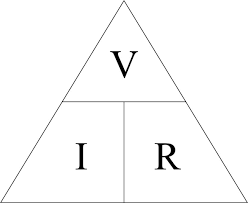
Ohm’s law is one of the basics in calculating voltage drop. It is expressed by the relationship: V = I * R, where:
V is the voltage.
I is the current.
R is resistance.
Voltage drop equation:
The voltage drop can be calculated using the equation: ΔV = I * (R * L * cos(θ) + X * L * sin(θ)), where:
ΔV is the voltage drop.
I is the current.
R is resistance.
L is the length.
X is the stress tolerance.
θ is the disparity angle.
Calculating energy loss:
The voltage drop can be calculated by looking at the power loss, which is proportional to the resistance value, current and length.
Use of modeling software:
Computer modeling and electrical grid simulation software are used to calculate and analyze voltage drops in large power systems.
Understanding voltage drop helps design and maintain electrical systems effectively, ensuring a stable and appropriate voltage is provided to all connected devices and systems.
Voltage drop and its importance in electrical installations:
The phenomenon of “voltage drop” One of the vital aspects that must be taken into consideration in the field of electrical installations. Voltage drop refers to the decrease in the electrical value of the voltage along electrical lines, and this drop is recorded as a result of the resistance of conductors and electromagnetic factors.
Importance of voltage drop:
Impact on hardware performance:
Voltage drop directly affects the performance of electrical appliances and equipment. Excessive landing can lead to inefficient operation of devices and reduce their efficiency.
Heating of conductors:
The voltage drop results in an increase in the load current and thus an increase in the temperature of the conductors, which may cause damage to the conductors or deteriorate their performance.
Reducing transportation capacity:
Voltage drops reduce the system’s ability to transmit current efficiently, resulting in a loss of power and a decrease in the quality of electrical service.
Effect on system components:
Voltage drops affect system components including transformers and switches, which may incur additional maintenance and repair costs.
Voltage drop calculation:
Voltage drop is calculated using the basic laws of electricity, where voltage and resistance equations are used to determine the amount of drop along a path. Voltage drop calculation is necessary to design an efficient electrical system and ensure the proper voltage is provided to appliances and equipment.
These examples show how voltage drop can be determined and how it is determined whether wiring meets standards. For example, if the source voltage is 240V, and the allowable voltage drop is 2.5%, then the allowable voltage is between 240 and 234V. That is, any voltage drop must be less than 6 volts (240 – 234).
In the case of home wiring, the permissible voltage drop is 3% for lighting circuits and 5% for electrical power circuits. Whether extensions meet these requirements can be determined by calculating the actual slump and comparing it to the allowable limit.
Ultimately, this approach shows how voltage drop can be a critical factor in the design and implementation of electrical installations, and how local and international standards must be complied with to ensure the efficiency and safety of the electrical system.
The maximum allowable voltage drop varies from one country to another, and the following are typical values showing the allowable drop range for low voltage installations:
Low voltage extensions connected directly from the grid low voltage distribution system:
Lighting circuits: 3%
Other circuits: 5%
Low voltage extensions connected from the distribution transformer:
Lighting circuits: 6%
Other circuits: 8%
These limits refer to normal operating conditions under steady state operation and do not apply to cases of electric motor starting, simultaneous operation of several loads, etc.
When the voltage drop exceeds the above values, larger cables should be used to reduce voltage loss. A voltage drop of 8% can lead to problems with motor loads, as motor performance requires a voltage within ±5% of the nominal value in steady-state operation. Low voltage can also result in motor starting current that exceeds full load capacity, causing problems during startup.
In cases of a voltage drop of 8%, this may cause the motor to stall or run slowly, causing it to either fail or consume high current affecting other equipment. For these reasons, it is recommended not to exceed the permissible values, especially in circuits sensitive to low voltage problems.
There are several steps to calculate voltage drop in electrical circuits, and the following is an explanation of these steps:
Calculating the drop in the circuits feeding the loads:
The voltage drop is calculated based on the specific capacity of the loads, and the voltage drop of the final branch circuits must not exceed 3% of the nominal circuit voltage.
Calculating voltage drop in motor supply circuits:
The voltage drop during motor starting is calculated based on the full load current of the motor multiplied by a proportional factor that depends on the type of motor starter (Star/Delta or DOL).
The value of the permissible voltage drop in the motor supply circuits is determined during the start of its movement and depends on the type of load that is operated by the motor.
Evaluation of the overall voltage drop:
The total voltage drop is evaluated, starting from the secondary terminals of the distribution transformer used in the supply to the furthest loads in the circuit.
If the voltage drop exceeds the permissible percentage, the cable size must be adjusted to be larger in order to comply with the permissible limit.
Use appropriate tables:
Voltage drop values per linear meter and per ampere of cable current are determined using appropriate tables available in electrical codes or from cable companies.
Using these steps, voltage drop in electrical circuits can be assessed and cables adjusted to ensure compliance with allowable voltage drop limits.
The law of voltage drop is formulated as follows:
( ΔU)=current (IB) ×Distance(L) ×Voltage drop factor(K)
The value of the voltage drop factor (�K) can be obtained from the table depending on the type of cable and connector And the type of circuit. By knowing the value of the current and the length of the cable, the voltage drop can be easily calculated.
The value of the voltage drop coefficient depends on:
Types of circuit use, whether for motor circuits, lighting circuits, or regular household currents whose power factor value is close to 1.
Cable type, whether single phase or three phase (three phase).
The type of conductor, whether copper or aluminum.
Below are solved examples of how to calculate the voltage drop using the table provided:
For copper cable:
For motor circuits:
For a cable cross-sectional diameter of 1.5 mm² and normal operation (cos ϕ = 0.8), the voltage drop factor (K) is 25.4.
For a cable cross-sectional diameter of 2.5 mm² and normal operation (cos ϕ = 0.8), the voltage drop factor (K) is 15.3.
And so on.
For normal load and lighting circuits:
For a cable cross-sectional diameter of 1.5 mm² and normal operation (cos ϕ = 0.35), the voltage drop factor (K) is 11.2.
For a cable cross-sectional diameter of 2.5 mm² and normal operation (cos ϕ = 0.35), the voltage drop factor (K) is 6.8.
And so on.
For aluminum cable:
For motor circuits:
For a cable cross-sectional diameter of 1.5 mm² and normal operation (cos ϕ = 0.8), the voltage drop factor (K) is 32.
For a cable cross-sectional diameter of 2.5 mm² and normal operation (cos ϕ = 0.8), the voltage drop factor (K) is 22.
And so on.
For normal load and lighting circuits:
For a cable cross-sectional diameter of 1.5 mm² and normal operation (cos ϕ = 0.35), the voltage drop factor (K) is 27.
For a cable cross-sectional diameter of 2.5 mm² and normal operation (cos ϕ = 0.35), the voltage drop factor (K) is 16.
And so on.
Using these values in the law (Δ�=�×��×�ΔU< /span>B< /span>), the voltage drop can be easily calculated.L×I×K=
If you have any inquiry, please contact us freely and we will be happy to serve you.
When we say Jeezly website, we are talking about one of the most famous Arab websites that was able, in a very short period of time, to achieve a very large demand for purchases from it by people from various parts and sectors of the Arab world.
On the Jeezly website, you will find a joint look and all the products that you may need in your home, starting with those for kitchens or bathrooms, but even those for gardens, you will find them on this wonderful site.
So, if you were lost before and did not know where to go to buy your products on the Internet, now you have the perfect solution, and all you have to do is go to the Jezli website and start choosing the products you want.
What are the features of Jeezly?
Since we are talking about a site that is preferred by many people around the world, there is no doubt that it is a site full of various features and characteristics. Therefore, we have decided to devote our next paragraph to pointing out the most prominent features of the Jezli site.
One of the most prominent features of the site is the proportionality of prices. On the Jeezly website, you do not have to worry about the imaginary prices of the products, as is the case with most sites that display their products on the Internet.
The price of delivering products is very reasonable and not expensive, and the site accepts delivery to various countries, without forgetting that it accepts free shipping on some products.
One of the features of the site is also the high quality of its products, as it is impossible to find a poor quality product. Rather, the Jezli website deals with the major companies, Philips, for example, and other famous brands, so you must remove from your mind the idea of the poor quality of one of the products. Another advantage of the site is that it does not specialize in one type of product, but rather you will find various types of products on it, for example, electrical appliances, hand tools, mechanical devices, paints, packages for establishing apartments, and many other types.
Jeezly website also accepts what is known as the shopping cart, which makes it easy for you to filter the products you want to buy and put them in one package in order to be able to pay with the click of a single button.
Accepts multiple payment methods.
We are pleased that you visit our social media pages, where we publish exclusive offers on our website.





 What are the features of Jeezly?