Articles December 26, 2023 17 min read

Everything you need to know about pipe connections and all their types

Everything you need to know about pipe connections and all their types Pipe connectionsStainless steel is considered one of the main elements in the field of mechanical engineering and pipe industry, as these connections provide the strength and durability necessary to withstand…
Everything you need to know about pipe connections and all their types
Everything you need to know about pipe connections and all their types

Everything you need to know about pipe connections and all their types

Pipe connectionsStainless steel is considered one of the main elements in the field of mechanical engineering and pipe industry, as these connections provide the strength and durability necessary to withstand various environmental conditions. Stainless steel is highly resistant to corrosion and rust, making it an ideal choice in many applications requiring durability and reliable performance.

The importance of connections in industrial systems:

Pipe connections play a vital role in industrial systems and technical facilities. These connections allow pipes and conduits to be effectively connected, creating a complete and reliable system. Stainless steel pipe fittings meet the requirements of the chemical, oil, and food industries, most of which deal with liquids or gases that require sanitary and corrosion-resistant standards.

Types of stainless steel pipe fittings:

  1. Welding joints:
    • Solder joints are among the most common. The welding process allows for efficient fusion of the tubes, creating a strong and sustainable connection.
  2. Bolts and nuts connections:
    • These connections are used in places where disassembly and re-disassembly are necessary. Screwsand nuts provide ease of assembly and maintenance.
  3. Compression connections:
    • Used in applications requiring high pressure resistance. These connections are ideal for industrial applications that are exposed to challenging environmental conditions.
  4. Quick connect links:
    • These connections provide quick installation and maintenance, reducing the time required to assemble the pipes.
  5. High pressure connections:
    • Used in applications requiring high pressure and high current resistance. These connections are suitable for the harsh conditions of the oil and gas industries.

Advantage of stainless steel pipe fittings:

  • Corrosion Resistance:Pipe fittingsStainless steel withstands corrosion excellently, making it ideal for harsh environmental conditions. .
  • Durability and Strength: Stainless steel is characterized by its high strength and durability, making it a reliable choice for high-pressure applications.
  • Health and Safety:Stainless steel has hygienic properties, making it suitable for use in the food and pharmaceutical industries.

Stainless steel pipe fittings are very popular in various industries due to their great benefits in terms of durability and resistance, making them an ideal solution for modern engineering and manufacturing needs.

Everything you need to know about pipe connections and all their types

Components of pipelines and the basics of their design

Pipe fittings are essential elements in the design and installation of piping lines, as they play a vital role in routing pipes and facilitating changes in direction and size, as well as Providing links to different branches. This includes various types of fittings such as elbows, pipe reducers, tee connections, Olet connections, caps, crosses, and more. These fittings are widely used in the fields of mechanical engineering and plumbing industry.

Definition of the functions of pipe fittings:

Pipe fittings are components that help guide pipes and facilitate changes in direction and size, and are also used to provide branching points in lines. These fittings include elbows, reducers, tee connections, Olet connections, caps, crosses, etc. They are manufactured and purchased as separate components.

Delivery and functions:

The functionof pipe fittings is to direct and divert pipes effectively. They play a vital role in the performance of pipes and ducts, and their functions vary according to layout needs and process requirements. Pipe fittings are connected to pipes using various end connections.

Types of pipe connections:

  1. Welding joints:
    • The welding process enables efficient fusion of pipes creating a strong and sustainable connection.
  2. Bolts and nuts connections:
    • It is used for disassembly and re-disassembly and provides ease of assembly and maintenance.
  3. Compression connections:
    • Used in applications requiring high pressure resistance.
  4. Quick connect links:
    • Provides speed in installation and maintenance.
  5. High pressure connections:
    • Used in high pressure and large current applications.

Pipe fittingsStainless steel is an ideal solution in various industries due to its resistance to corrosion and rust, and meets the needs of modern mechanical and plumbing engineering.

Everything you need to know about pipe connections and all their types

Types of pipe connections in the plumbing and piping industry

Various types of Pipe Fittings are used in the piping, plumbing and pipeline industries to serve as branch connections or other components of embedded piping. Here’s a look at some common pipe fittings that are widely used:

  • Pipe elbow:

Ordinary pipe elbow.

900 elbow.

450 elbow.

Long elbow radius.

Short radius elbow.

  • Launch link:

Equals to the tee.

Reducing the tee.

  • Reducer:

Single-center reducer.

Eccentric reducer.

  • Blocked tee:

They are used to achieve efficient and secure connection between pipes in areas where geometric changes may be limited. The blocked tee is an ideal solution in cases where it is difficult to implement significant changes in the direction of the pipes.

  • Reducer:

It is used to connect pipes of different diameters. The reducer enables smooth flow of liquids or gases inside the pipes and ensures a gradual shift of the pipe size.

  • Single center reducer:

It features a design that reduces the size of the tube on one side only. This type of reducer is used when a specific flow or sizing is needed in one direction.

  • Eccentric reducer:

Used when scaling or expansion in both directions is required. This design allows balancing the flow of liquids or gases in the pipes.

  • Unions:

Used to connect pipe ends together at different angles. The unions can be detachable to facilitate installation and maintenance.

  • Pairing:

It is used to connect directly adjacent pipes, and is usually used in quick connections that require frequent re-disassembly.

  • Half pairing:

It connects two ends of the pipe while maintaining a radius connection.

  • Complete coupling:

It is used for direct connection between two ends of a pipe without affecting the diameter.

  • Reduce coupling:

It is used to convert from a large diameter to a smaller diameter, and contributes to directing the flow of liquids or gases effectively.
  • transformers:

Adapters are used to convert pipes from one type or diameter to another type or different diameter. This device enables seamless integration and connection of various piping components.

  • Contacts provided:

They are connections that provide a strong and reliable connection between different pipes or components.

  • Wildolite:

They are used in welding operations to join pipes or metal components together.

  • Sokolet:

They are used to connect pipes at a certain angle, and are specially designed pieces to achieve the desired orientation.

  • elbow:

It is used to direct the direction of pipes at different angles, allowing the flow direction to be changed effectively.

  • Threadolite:

It is a special formulation used in pipes that need to connect threaded components.

  • Nebulette:

Used in pipes to achieve turning or changing the direction of pipes.

  • Latcheville:

Used to hold pipes or components in place and oriented properly.

  • Swiebolite:

Used to connect two ends of pipes securely and reliably.

  • Flageolet:

A type of valve that allows control of the flow of liquids or gases in a pipe.

  • Pipe valves:

Pipe valves come in many types and are used to control the flow of liquids or gases in pipes. This includes gate valve, ball valve, check valve, and plug valve.

  • Needle hole:

It is used to precisely control the flow of liquids or gases through pipes, as the hole size can be precisely adjusted.

  • Butterfly valve:

A valve that features a circular disc that moves at a 90 degree angle to control the flow of a liquid or gas in a pipe.

  • world valve:

Used to control the flow of liquids or gases, the valve is opened or closed by a disc moving in a vertical direction.

  • Express:

An element that allows four pipes to be connected at a given point, allowing flow to be branched in several directions.

  • equal cross:

An element that allows four pipes to be connected equally, allowing branching in four equal directions.

  • Cross reduction:

It connects four tubes of different diameters, allowing the diameter and flow in the tubes to be varied.

  • says:

An element used to connect three pipes at a given point, allowing flow to be branched in three directions.

  • hat:

A piece used to seal the end of a pipe or pipe, and comes in a design that fits snugly over the end of the pipe.

  • Nipples:

Used to connect pieces of pipe or tubes of different sizes or to cover separation points.

  • stopper:

A piece used to seal the end of a pipe or hole, and has a design that prevents the leakage of liquids or gases.

  • Fuss:

Used to seal or provide insulation between different pieces, and are often used in flange connections.

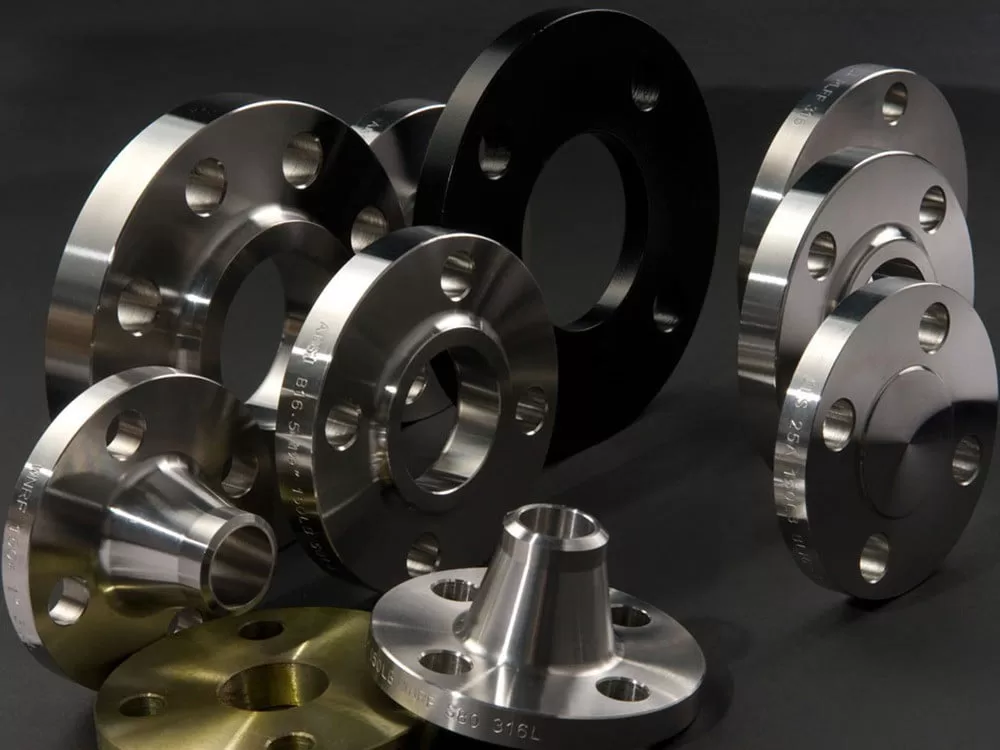
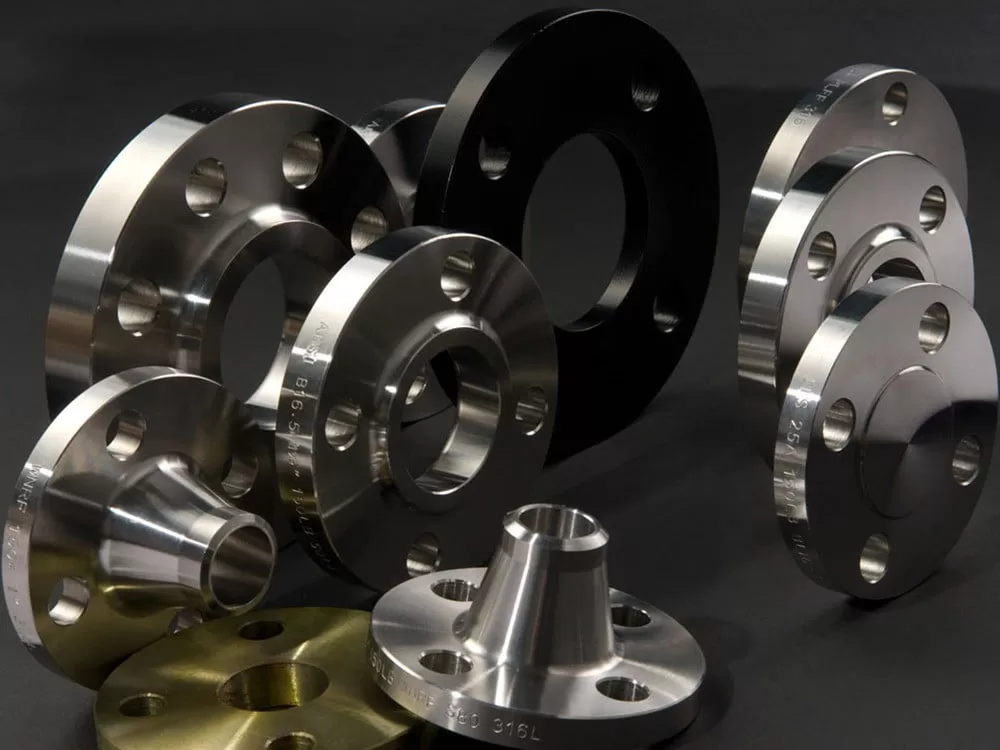
  • Pipe flanges:

They are used to securely connect pieces of pipe or conduit, and are available in different designs to meet installation requirements.

  • Expansion joint:

Used to allow pipes to expand as a result of temperature changes, preventing deformation or damage.

  • Steam traps:

Used to separate vapor from liquids in piping systems.

  • Long ray see:

It is used to orient pipes at a certain angle without distortion or change in pipe diameter.

  • 3D bends:

They are used to change the direction of pipes in three ways, allowing connection in three different directions.

  • 5-D bends:

Pipe bends that extend along five diameters of pipe, and are used to precisely guide pipes in specific applications.

  • fork:

A part that is installed at the end of a pipe to form a flow path for liquids or gases.

  • Signs:

A round piece of metal used to securely connect pipes together, and is a common fastener in the engineering industry.

  • You can see:

A type of bend that follows miter standards and is used to guide pipes at a specific angle according to metric measurements.

However, note that if a pipe or pipeline is bent in a pipe manufacturing shop to change direction, it is not a pipe fitting. Pipe fittingsare always separate elements of the pipe. Click on the words in bold and italics above to learn about these items in detail as I have previously published separate articles about them. We will discuss the remaining pipe fittings in the following paragraphs.

Everything you need to know about pipe connections and all their types

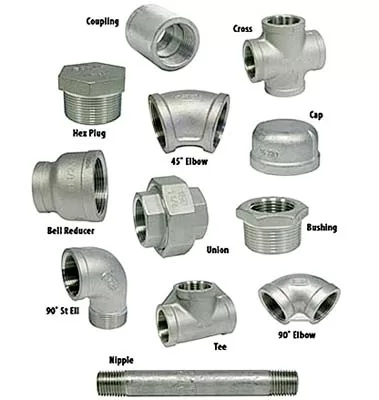
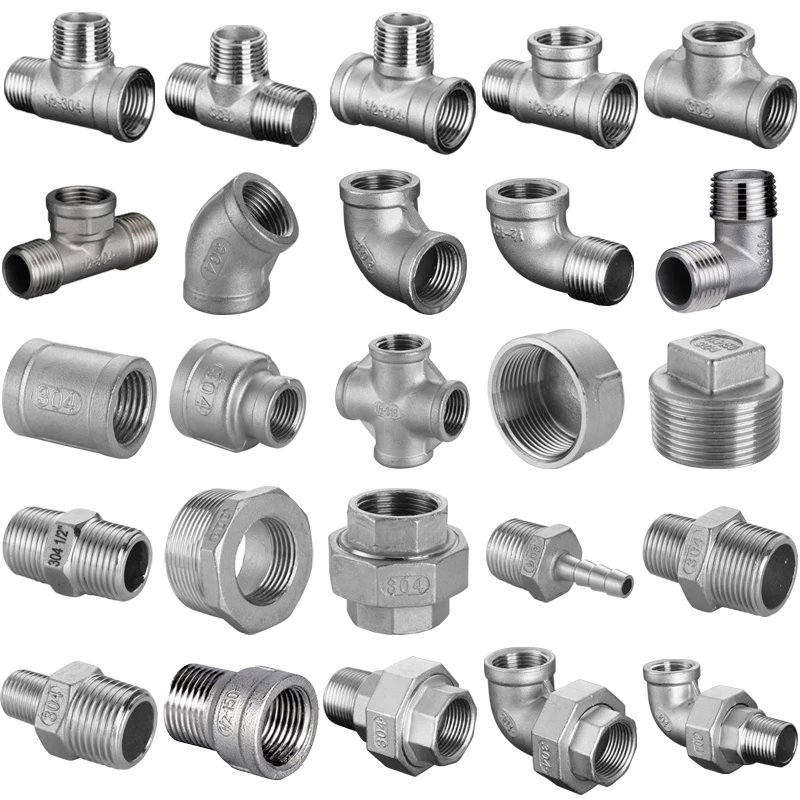
The following picture shows different types of fixtures for your reference.

 Pipe fittings for the piping and plumbing industries

Pipe union/Pipe fitting union/Pipe union installation:Pipe union is a special type of pipe fitting that unites two pipes and can be easily separated without any deformation of the pipes. They provide a positive seal and easy assembly and disassembly. In pipe fitting applications, they are widely used mainly in the small bore piping and sanitary industries. Pipe unions are made of carbon steel, stainless steel, cast iron, copper, nickel, aluminum, plastic and alloy materials depending on temperature and service requirements.

The pipe union consists of three parts; Male end, nut, and female end. The female end has threads on the inside while the threads are on the outside in the male end. The nut provides the necessary pressure and locks the joint. Figure 2 represents typical conduit unions used in the manufacture of conduit fittings.

Pipe unions

Pipe Adapters:Adapters are used as pipe fittings to connect dissimilar pipes. Pipe adapters are available in different types for different applications. So care must be taken while ordering to get the right type. They are classified as: lock tube adapter, offset tube adapter, male tube adapter, female tube adapter, straight thread adapters, etc. They find the majority of their applications in sanitary pipes for plumbing applications. They are usually made of steel, cast iron, polymers, copper, aluminum, bronze and brass materials.

Olet pipe connections:

Olet pipe connectors are self-reinforcing branch connections used to connect small pipe branches from larger main pipes. These connectors are used as an alternative to tube-to-branching in traditional tees. They are specially designed by a company called Bonney Forge and are widely used in the pipe industry.

Types of Olet pipe fittings widely used include:

  1. Weldolet:
    • Contact branch 900 and available in sizes 2 and larger.
    • Weldolet pipe fittings are suitable for high pressure and temperature classes.
    • Available in two sizes: full size and mini size.
  2. Sockolet:
    • 900 branch joint is used to connect small bore welded pipe to larger size butt welded pipe head.
    • Comes in full size and reduced size.
  3. Thredolet:
    • 900 angle branch connection is used to connect small bore threaded fittings to welded pipe connections.

Oil pipe parts are designed to MSS SP-97 or ASME B 31.3 standards and are available in various sizes and shapes to meet the requirements of various applications in the pipe industry.

Everything you need to know about pipe connections and all their types

Pipe cross:

The conduit cross is also popular as a four-way conduit installation, consisting of one inlet and three outlet connections or vice versa. It is rarely used in the oil and gas industries but is useful in fire sprinkler systems where four pipe connections meet at one common point.

says:

Wye pipe fittings are also known as side fittings due to their “Y” shape. They are used in drainage systems to direct flow smoothly, as they have low friction loss and very low turbulence.

Figure 6: Crossway connections:

Figure 6 shows different types of conduit fittings, including crossover and wye connections.

Caps and plugs:

Caps and plugs are used to seal the ends of pipes. They provide a tight seal and are used in plugged pipes or in future connections.

Fuss:

Bushing combines different pipe sizes and is used to reduce the larger size to the smaller pipe size. It takes up very little space compared to union or pairing.

Long ray see:

Long radius pipe bends are used in fluid transportation pipelines that require drilling, as they feature lower pressure drop and smooth flow due to their long radius and smooth direction change.

fork:

A fork is a useful fitting used in a plumbing system to attach flexible pipes to pipes.

Uses of pipe fittings and their classification:

To extend or terminate the operation of pipes:

  1. Coupling: Used to connect two ends of pipes together.
  2. Adapters: are used to connect pipes that are not the same size.
  3. Unions:Used to connect three or more pipes.
  4. Caps: Used to tightly close the ends of pipes.
  5. Plugs: Used for quick connection and locking.

To change direction:

  1. Elbows: It is used to change the direction of pipes at a certain angle.
  2. Bends: They are used to change the direction of pipes in a curved manner.

To connect two or more pipes:

  1. Tees: They are used to support pipes and connect them to structures.
  2. Cross: Used to connect two pipes that intersect at a common point.
  3. Side Inlet Elbows: Used to connect to side pipes.

To change the size:

  1. Reducers: They are used to reduce the size of pipes.
  2. Bushings: They are used to reduce the size of pipes between different pipes.
  3. Coupling: Used to connect pipes of different sizes.
  4. Tee Reduction:Used to reduce the size of pipes at the tee.

To control the flow:

  1. Valves: are used to control the flow of materials in pipes.

Criteria for selecting piping fittings: Piping fittings are best selected according to design and operating requirements, including pressure, temperature, and material type. The specific needs of each application must be considered to ensure efficient and safe piping performance

Everything you need to know about pipe connections and all their types

Factors for choosing pipe fittings:

  1. Construction Materials: Piping construction materials must be compatible with the service and temperature. Consistency with the pipe material used contributes to efficient performance and avoids corrosion or unwanted chemical reactions.
  2. Types of final connections:Knowing the types of final connections required contributes to choosing the appropriate installations and ensuring compatibility with the final needs.
  3. Pipe fitting type: Choosing the type of fitting depends on the preferred method of connection, such as threaded or sliding, and whether it is male or female.
  4. Pipe fitting size:The fitting size should be determined based on the size of pipe to be used, usually based on the pipe’s outer diameter (OD) or inner diameter (ID).
  5. Schedule or Thickness: Consider the appropriate thickness to withstand pressure and meet operating requirements.
  6. Pressure Rating: Determining the internal pressure rating of a fitting is critical to ensuring that it can withstand environmental conditions and the pressure of the passing liquid or gas.
  7. Pipe installation standards and codes: Specific standards and codes for piping installations, such as ASTM, ASME, DIN, BSP, MSS, ISO, must be adhered to to ensure quality and safety.

By carefully selecting ducting assemblies based on these factors, efficient and reliable ducting system integration can be achieved.

Pipe installation standards:

Pipe installation standards are essential to ensure safety and compliance with industrial and design requirements. Here are some key criteria:

  1. ASME B16.9: Specifies design and dimensional requirements for large and small piping assemblies.
  2. ASME B16.28: Covers dimensions and specifications for welded and machined pipe assemblies.
  3. ASME B16.11: specifies flange and welding requirements for small piping assemblies.
  4. ASME B16.1, B16.3, B16.4, B16.5: These standards cover various types of flanges and fittings.
  5. ASME B16.14: specifies design and dimensional requirements for cast pipe assemblies.
  6. ASME B16.15: Addresses pressure and design requirements for cast iron pipe fittings.
  7. ASME B16.25: specifies design and dimensional requirements for ammonium welding equipment.
  8. ASME B16.36: Addresses high-pressure industrial piping fittings.

Pipe installation materials:

Pipe installation materials vary according to needs and applications. Common materials include:

  • carbon steel
  • stainless steel
  • Low alloy steel
  • LTCS (low temperature steel)
  • Nickel-copper alloy
  • Aluminum and titanium
  • Bronze and copper
  • CPVC, EPDM and PVC materials
  • Iron(grey/cast/ductile)
  • Synthetic rubber and neoprene
  • Nylon, polyethylene (PE) and polypropylene (PP)
  • PTFE
  • PVC (polyvinyl chloride)

Pipe fittings applications:

Pipe fittings are used in a wide range of industries and applications, including:

  • Oil and gas industry
  • Chemical and petrochemical industry
  • Food and dairy industries
  • Steel and metal industry
  • Municipal and environmental infrastructure
  • Construction, roads and highways
  • Marine and dredging industries
  • Irrigation and agriculture
  • Manufacturing and process devices
  • Paper and pulp industry
  • Waste and sewage
  • Heating, ventilation and air conditioning (HVAC)
  • Electrical and electronic industries
  • Flow control and industrial piping systems.

If you have any inquiry, please contact us freely and we will be happy to serve you.

Joyce box outside, 2 holes in frame, specific sizes

Gahzly website for purchasing electrical appliances

When we say Gahzly website, we are talking about one of the most famous Arab websites that was able, in a very short period of time, to achieve a very large demand for purchases from it by people from various parts and sectors of the Arab world.

On the Gahzly website, you will find a joint look and all the products that you may need in your home, starting with those for kitchens or bathrooms, but even those for gardens, you will find them on this wonderful site.

So, if you were lost before and did not know where to go to buy your products on the Internet, now you have the perfect solution, and all you have to do is go to the Gahzly website and start choosing the products you want.

LED strip connectionWhat are the features of Gahzly?

Since we are talking about a site that is preferred by many people around the world, there is no doubt that it is a site full of various features and characteristics. Therefore, we have decided to devote our next paragraph to pointing out the most prominent features of the Gahzly site.

One of the most prominent features of the site is the proportionality of prices. On the Gahzly website, you do not have to worry about the imaginary prices of the products, as is the case with most sites that display their products on the Internet.

The price of delivering products is very reasonable and not expensive, and the site accepts delivery to various countries, without forgetting that it accepts free shipping on some products.

One of the features of the site is also the high quality of its products, as it is impossible to find a poor quality product. Rather, the Gahzly website deals with the major companies, Philips, for example, and other famous brands, so you must remove from your mind the idea of ​​the poor quality of one of the products. Another advantage of the site is that it does not specialize in one type of product, but rather you will find various types of products on it, for example, electrical appliances, hand tools, mechanical devices, paints, packages for establishing apartments, and many other types.

Gahzly website also accepts what is known as the shopping cart, which makes it easy for you to filter the products you want to buy and put them in one package in order to be able to pay with the click of a single button.

Accepts multiple payment methods.

Electrical circuit components

We are pleased that you visit our social media pages, where we publish exclusive offers on our website.

Our Facebook page Here.

Our Twitter account Here.

Leave a Reply