


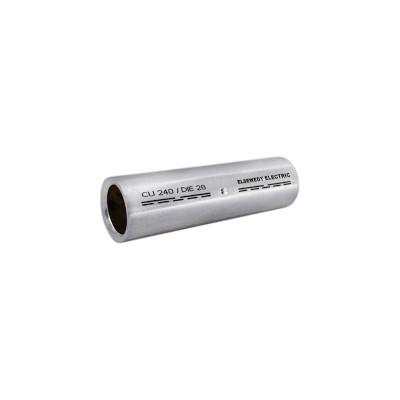
سرافيل ألومنيوم السويدي (Aluminum Ferrules/Connectors)

Price range: 9,95 EGP through 235,00 EGP
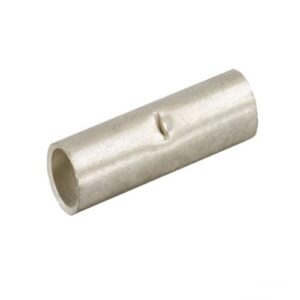
تُعد سرافيل ألومنيوم السويدي (Aluminum Ferrules)
الحل الهندسي الأكثر موثوقية واقتصادية لعمليات وصل وتطويل كابلات الألومنيوم في البنية التحتية والمشروعات الإنشائية الكبرى. في ظل الاعتماد المتزايد على كابلات الألومنيوم كبديل استراتيجي للنحاس، تبرز الحاجة إلى “سرفيلة” تمتلك خصائص ميكانيكية وكهربائية تتوافق تماماً مع طبيعة معدن الألومنيوم. يتم تصنيع سرافيل السويدي من سبائك ألومنيوم عالية النقاء ومعالجة حرارياً، مما يضمن تدفقاً انسيابياً للتيار الكهربائي عبر نقطة الوصل دون مقاومة تُذكر، وبالتالي تجنب مشاكل فقد الجهد أو السخونة الزائدة التي قد تضعف كفاءة الشبكة.
تتميز هذه السرافيل بتصميم أنبوبي ذو سماكة جدران مدروسة بعناية لتتحمل الضغوط الهائلة الناتجة عن الكبس الهيدروليكي، مما يؤدي إلى طرد الهواء تماماً من بين شعيرات الكابل وخلق تلاحم ميكانيكي صلب يمنع “الزحف” بمرور الوقت. كما أن التصميم الداخلي للسرافيل يراعي تحدي “أكسيد الألومنيوم” العازل، حيث تعمل عملية الكبس على تفتيت هذه الطبقة وتأمين اتصال “معدن لمعدن” مباشر. تتوفر سرافيل ألومنيوم السويدي بمقاسات تبدأ من 16 مم² وصولاً إلى المقاطع العملاقة مثل 630 مم²، وهي مزودة بـ “حاجز مركزي” في أغلب الموديلات لضمان دخول أطراف الكابلات بمسافات متساوية، مما يجعلها المكون المفضل لدى مهندسي المواقع وشركات التوزيع لضمان وصلات دائمة وآمنة تحت الأرض وفي غرف الكابلات.
Please sign in to submit a product report.
Technical specifications
A single structured view of reviewed Product Entry data and canonical WooCommerce specifications.
- مقطع الموصل (مم²)
- 120 mm²، 150 mm²، 16 mm²، 185 mm²، 240 mm²، 25 mm²، 300 mm²، 35 mm²، 400 mm²، 50 mm²، 500 mm²، 70 mm²، 95 mm²
- Brand
- Elsewedy Electric
- Conductor material
- Aluminum
- Maximum temperature
- 70 degrees Celsius، 90 degrees Celsius
- Number of parties
- Single wire
- Dimensions
- 1 cm
- Description
- Reviews
Description
Elsewedy Aluminum Sleeves for Joining and Extending Power Cables
Introduction: Continuous-Joint Engineering for Aluminum Cables
As aluminum is increasingly used as a strategic and economical alternative to copper in power transmission and distribution networks, engineering challenges arise in splicing these cables safely and durably. Aluminum behaves differently from copper: an insulating oxide layer can form within seconds of air exposure, its thermal-expansion coefficient is different, and it tends to relax under sustained pressure through mechanical creep.
Elsewedy Aluminum SleevesIt is not merely a metal tube; it is the result of engineering research aimed at overcoming these challenges so that the “joint point” is the strongest point in the electrical circuit, not the weakest. Using Elsewedy sleeves rebuilds the cable’s electrical path with the lowest possible contact resistance, protecting the network from fires caused by excessive heating at connection points.
Chapter One: Technical Anatomy and Raw Materials
The strength of Elsewedy sleeves depends on the superior quality of the raw materials and advanced manufacturing processes:
1. High-Purity Electrolytic Aluminum
The sleeves are manufactured from pure aluminum alloys at a purity level that ensures maximum electrical conductivity.
- Technical Performance:High purity reduces the metal’s resistivity, ensuring that the sleeve does not impede current flow. It also prevents internal corrosion caused by foreign metallic impurities in the alloy, which is especially important in buried cables.
2. Annealing Process
All Elsewedy sleeves undergo carefully controlled heat-treatment stages that give the metal excellent mechanical ductility.
- Critical Function:Annealing makes the aluminum compressible without cracking the sleeve body. When a hydraulic crimper with a hexagonal die is used, the sleeve closes tightly around the cable strands and expels trapped air, turning the joint area into a solid mass that prevents internal arcing and provides mechanical stability against tensile forces.
3. Tubular Design with Internal Stop Barrier
Elsewedy sleeves feature a central stop barrier in most industrial models.
- Engineering importance:This barrier ensures that the first and second cables enter by exactly equal distances, keeping the crimping zone and current distribution balanced on both sides. Without the barrier, one cable may enter too short a distance, creating a hot spot that can eventually melt the joint.
Chapter Two: Technical Challenges and Elsewedy Solutions for Aluminum
1. The Aluminum Oxide Challenge
As soon as the cable insulation is stripped, a very thin oxide layer forms. This layer is electrically insulating and creates high resistance.
- Elsewedy Approach:The sleeve’s internal diameter is engineered to match the cable size precisely. When crimped under high hydraulic pressure of 12–15 tons, this insulating layer is mechanically broken up, creating highly conductive metal-to-metal contact points that help maintain voltage stability.
2. Mechanical Creep
Aluminum tends to relax under continuous pressure over time because of day-to-night temperature changes and repeated expansion and contraction.
- Elsewedy Approach:The wall thickness of Elsewedy sleeves is designed to provide continuous gripping force. The treated alloy has mechanical memory that keeps pressure on the conductor, compensates for slight relaxation, and maintains a secure connection for many years without requiring recrimping or maintenance.
Chapter Three: Applications of Elsewedy Aluminum Sleeves in Major Sectors
These sleeves are used wherever highly stable power transmission is required:
- Repairing faults in buried cables:The standard approved solution for joining cables that have suffered mechanical cuts during construction excavation work.
- Public-Lighting Networks:Where aluminum cables are widely used to connect lighting poles in new cities and on highways.
- Transformer stations and distribution pillars:For extending feeder cables or joining main cables inside electrical rooms.
- Agricultural-Reclamation Projects:For supplying large irrigation pumps that require long cable runs and large aluminum conductor sizes to reduce project cost.
- Solar farms:For joining DC and AC cable runs that use aluminum to transmit power over long distances.
Chapter Four: Engineering Installation Protocol — The Ideal Hydraulic Joint
To achieve a long-lasting joint, rated up to IP68 when properly insulated, follow these steps:
- Mechanical Cleaning:After stripping the cable, clean the aluminum strands with a dedicated wire brush to remove the gray oxide layer that has formed.
- Use aluminum jointing compound:Apply a sufficient amount of conductive jointing compound inside the sleeve before inserting the cable; it helps prevent future oxidation and makes insertion and crimping easier.
- Selecting the crimper and crimping dies:Use a hydraulic crimper with a hexagonal die that exactly matches the size marked on the sleeve.
- Crimp distribution:Apply at least two crimps on each side of the sleeve, starting from the center and working toward the cable end to expel trapped air.
- Final insulation:For buried cables, cover the sleeve with adhesive-lined heat shrink or place it inside a resin-filled joint kit to isolate it completely from ground moisture.
Be the first to review “سرافيل ألومنيوم السويدي (Aluminum Ferrules/Connectors)”
You must be logged in to post a review.
Product Questions & Answers
No questions yet. Ask the supplier about specifications, compatibility, certifications or installation requirements.

Reviews
There are no reviews yet.