


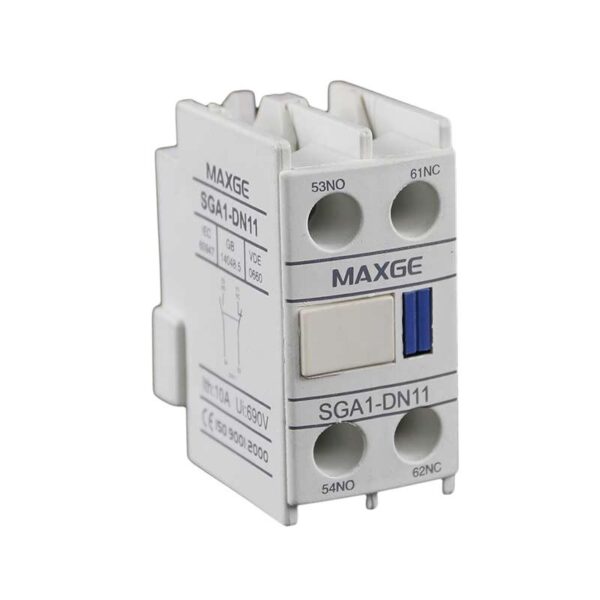
Maxge

Price range: 160,00 EGP through 230,00 EGP
Comprehensive Guide and Electrical/Physical Architecture of Maxge Instantaneous Auxiliary Contact Blocks: Synchronized Control Engineering for Automation Systems
Introduction to Maxge Instantaneous Auxiliary Contact Blocks and their engineering roleIn precise industrial control systems, auxiliary contacts are used to coordinate control signals with the operating state of power devices. The Instantaneous Auxiliary Contact Blocks from Maxge form an important add-on component for industrial control and interlocking circuits, available through Gahzly. Their defining characteristic is their instantaneous mechanical response; they change state from open to closed, or vice versa, at the same time the main contactor operates, without an intentional time delay, making them suitable for automation applications that require closely synchronized logic signals at the site through Gahzly.
Electrical, physical, and operating architecture of Maxge instantaneous auxiliary contacts
Direct mechanical synchronization The auxiliary block is mechanically linked to the moving mechanism of the main contactor. When current energizes the contactor Coil, the magnetic core moves the main contacts and the same mechanical movement actuates the auxiliary contacts. This direct linkage allows an Interlocking or Indication signal to change in coordination with the main power circuit. This physical synchronization minimizes the possibility of a Time Gap that could create conflicting logic states in complex industrial control circuits through Gahzly.
Please sign in to submit a product report.
- Description
- Reviews
Description
Comprehensive Guide and Electrical/Physical Architecture of Maxge Instantaneous Auxiliary Contact Blocks: Synchronized Control Engineering for Automation Systems
Compact design and integration with the contactor body
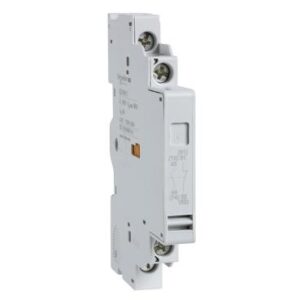
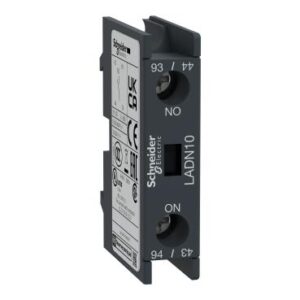
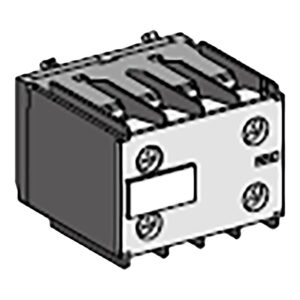
The blocks use a compact, mechanically integrated design and are mounted directly on the main contactor, helping preserve panel space and orderly control-panel layout. These contacts are intended for low-current control circuits and can interface contactor status with a central PLC or with indication and monitoring circuits. This mechanical arrangement supports stable operation when the block is correctly matched to the compatible contactorwithin the installation.Gahzly.
Field installation and connection of Maxge instantaneous auxiliary contact blocks
Direct mechanical mounting on the contactor
Begin installation by completely isolating electrical power from the panel. Press the instantaneous auxiliary contact block into its designated mounting position on the front of the main contactor until the built-in retaining clips engage securely. Confirm full mechanical engagement with the contactor’s moving mechanism according to the manufacturer’s instructions at the site through Gahzly.
Connecting control wiring and logic circuits
Connect wires for Interlocking circuits, Pilot Lights, or PLC inputs to the block’s normally open (NO) or normally closed (NC) contacts as required. Tighten terminal screws correctly to maintain a stable control signal and minimize additional contact resistance, and verify the wiring against the approved electrical schematic at the installation through Gahzly.
Technical specifications and functions table
| Technical specification | Primary function | Practical benefit to the user |
|---|---|---|
| Instantaneous response (Instantaneous) | Changing auxiliary-contact state immediately with operation of the main contactor | Reducing logic errors and maintaining accurate circuit synchronization |
| Multiple contact types (NO / NC) | Providing flexibility in logic and control-circuit design | Supporting complex interlocking and protection logic |
| Compact design (Compact Design) | Installation in limited space above the contactor | Saving distribution-panel space and simplifying organization |
| Reliable electrical connection | Safely transmitting control signals to sensitive circuits | Stable signaling and reduced interference in control systems |
Objective advantages and limitations
The critical auxiliary component for improving the efficiency of control and interlocking circuits through Gahzly.
Fully instantaneous response that ensures there is no intentional time delay in status signals.
A compact, reliable design that is easy to install and integrate in crowded panels through Gahzly.
Ideal for sensitive automation applications (PLC) and logic circuits that require precise timing.
Depends entirely on mechanical compatibility with the contactor type, so the correct model must be selected carefully.
Not designed for high currents; these contacts are intended only for control and signaling circuits, not power circuits.
Suitable and unsuitable applications
Electrical Interlocking circuits that prevent two devices from operating simultaneously through Gahzly.
Industrial Automation Systems and supplying equipment-status signals to a PLC through Gahzly.
Indicator panels and warning lights linked to contactor status through Gahzly.
Not suitable for carrying large load currents such as motors or heaters, as this can damage the auxiliary contacts.
Not suitable for installation on contactors that are not mechanically designed to accept these auxiliary blocks.
Safe operation and installation method
Complete electrical isolation: disconnect all electrical supplies from the panel and verify the absence of voltage before starting work at the site through Gahzly.
Mechanical installation: press the auxiliary contact block into its designated position on the contactor until it is mechanically secured.
Electrical connection: connect control-circuit wires to the (NO) or (NC) contacts according to the panel requirements and tighten the terminals.
Functional test: verify that the auxiliary-contact state changes immediately in coordination with manual or electrical operation and release of the contactor through Gahzly.
Important safety warning: always make sure the block is securely mounted; mechanical looseness can cause loss of synchronization or failure of the auxiliary signal.
Maintenance, cleaning, and extending service life
Periodic screw inspection: verify that control-wire terminal screws remain tight to prevent vibration-related signal loss at the site through Gahzly.
Protection from contamination: keep the panel closed and clean to prevent dust from accumulating inside the auxiliary contacts.
Periodic synchronization test: verify that the block continues to change state immediately in coordination with movement of the contactor’s main mechanism.
Avoid electrical overloading: do not expose these contacts to current above their specified rating, as this can burn the precision contact surfaces at the site through Gahzly.
Important advice before purchase
Verify mechanical compatibility: make sure the auxiliary contact block is fully compatible with the model and series of your main contactor before purchasing at the site through Gahzly.
Determine control requirements: identify the number and type of contacts (NO / NC) required by your electrical-panel schematic before approval at the installation through Gahzly.
Purchase from trusted sources: obtain genuine Maxge accessories through Gahzly to support product quality, precise mechanical compatibility, and reliable instantaneous operation of your system.
Comprehensive conclusion
Maxge Instantaneous Auxiliary Contact Blocks are The critical auxiliary component auxiliary devices that provide control panels with synchronized status and industrial logic functions. Their instantaneous response and compact direct-mount design support reliable interlocking and automation circuits. Selecting the correct units and sourcing them through Gahzly is a sound strategic step toward improving panel performance, coordinating equipment accurately, and maintaining professional industrial electrical-system management.
Be the first to review “Maxge”
You must be logged in to post a review.
Product Questions & Answers
No questions yet. Ask the supplier about specifications, compatibility, certifications or installation requirements.

Reviews
There are no reviews yet.