


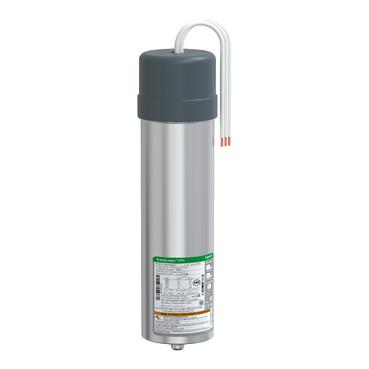
Schneider

Price range: 2.633,40 EGP through 6.781,10 EGP
Comprehensive guide to Schneider Electric 440 V (BLRCS) power-factor correction capacitors: harmonic-duty engineering and stability of advanced industrial networks
Introduction to high-voltage-rated power-factor correction systems in industrial automationModern industrial power systems can experience elevated operating voltage and harmonic distortion caused by complex electronic loads. Schneider Electric BLRCS 440 V power-factor correction capacitors are intended for systems requiring a higher voltage rating than standard 400 V capacitor applications and may be used in power-factor correction systems exposed to moderate harmonic conditions when correctly coordinated. They provide capacitive reactive power to offset inductive reactive demand, helping improve electrical-system efficiency and reduce unnecessary current loading.Electrical and physical architecture of Schneider Electric BLRCS 440 V capacitors
Advanced film design and additional voltage withstand capabilityBLRCS 440 V capacitors use Metallized Polypropylene Film technology designed for a higher voltage rating than conventional 400 V units. This construction provides additional voltage margin for power-factor correction systems that may experience moderate voltage elevation or operation with appropriately selected detuned reactors, helping reduce premature dielectric stress.
Please sign in to submit a product report.
Technical specifications
A single structured view of reviewed Product Entry data and canonical WooCommerce specifications.
- كيلوڤار / (Kilovolt-Ampere Reactive)
- 5 كيلوڤار، 7.5 كيلوڤار، 10.4 كيلوڤار، 12.5 كيلوڤار، 15 كيلوڤار، 20 كيلوڤار، 25 كيلوڤار، 30.3/36.4 كيلوڤار
- Description
- Reviews
Description
Comprehensive guide to Schneider Electric 440 V (BLRCS) power-factor correction capacitors: harmonic-duty engineering and stability of advanced industrial networks
Self-healing technology and safe discharge system
The internal capacitor design inthe comprehensive guide to 440 V power-factor correction capacitorsincorporates a Self-Healing dielectric concept that can isolate small localized dielectric faults rather than allowing them to propagate through the complete winding. Integrated discharge resistors reduce stored electrical charge after disconnection, helping bring terminal voltage down toward a safer level before maintenance.Gahzly.
Enclosure engineering and resistance to thermal degradation
The capacitor enclosurethe comprehensive guide to 440 V power-factor correction capacitorsuses industrial materials selected to protect the capacitive elements from normal mechanical vibration and heat generated during operation. Correct ventilation and thermal management inside power-factor correction panels remain essential for maintaining service life.Gahzlyand support dependable operation of the overall system.
Operating mechanism of 440 V power-factor correction capacitors
Reactive-power compensation and harmonic-duty operationBLRCS capacitorsthe comprehensive guide to 440 V power-factor correction capacitorssupply Capacitive Reactive Power to offset inductive reactive power drawn by motors, transformers, and similar loads. Their 440 V rating can provide the voltage margin required in systems using Detuned Reactors, where capacitor terminal voltage may rise above the nominal network voltage. Correct coordination helps avoid Resonance and reduces electrical stress on the installation.Gahzly.
Reducing thermal losses and protecting network componentsIntegrating these capacitorsthe comprehensive guide to 440 V power-factor correction capacitorscan reduce reactive current flowing through cables and transformers, which in turn reduces Copper Losses and frees part of the system’s current-carrying capacity. Correct power-factor correction may also improve voltage regulation and help avoid utility penalties associated with excessive reactive-energy demand.Gahzly.
Field installation and connection of BLRCS 440 V capacitors
Mechanical mounting inside power-factor correction panelsBLRCS capacitorsthe comprehensive guide to 440 V power-factor correction capacitorsmay be mounted according to the manufacturer’s approved orientation and panel design, with adequate spacing for ventilation and heat dissipation. Good airflow around adjacent units is important for maintaining acceptable operating temperature.Gahzly.
Electrical connection to the three phases and capacitor switching contactorsThe capacitorthe comprehensive guide to 440 V power-factor correction capacitorsis connected to the Three-Phase network through correctly rated protective devices and Capacitor Contactors designed to limit high Inrush Currents. Conductors and terminals should be tightened to the manufacturer’s specified torque to reduce resistive heating at connection points.Gahzly.
Technical specifications and functions table
Objective advantages and limitations
Key advantages:
Designed for industrial networks requiring additional voltage margin and coordinated harmonic-duty operationthe comprehensive guide to 440 V power-factor correction capacitorswithin the installation.Gahzly.
Self-Healing technology and discharge resistors support safer and more reliable service.
Compact construction simplifies integration into different power-factor correction panelsthe comprehensive guide to 440 V power-factor correction capacitors.
Reduces reactive current and associated losses in cables and transformers
Limitations and objective disadvantages:
Higher initial cost than standard 400 V capacitors may apply because of the higher voltage rating and application requirements.the comprehensive guide to 440 V power-factor correction capacitors.
Capacitors are sensitive to excessive ambient temperature, so adequate panel ventilation or cooling is important.
Suitable and unsuitable applications
Ideal applications:
Factories and production lines with elevated harmonics or network conditions requiring 440 V-rated correction capacitorsthe comprehensive guide to 440 V power-factor correction capacitorswithin the installation.Gahzly.
Large industrial installations using capacitor banks together with Detuned Reactor Banks.
Electrical networks with moderate voltage elevation or operating conditions that justify a 440 V capacitor ratingthe comprehensive guide to 440 V power-factor correction capacitors.
Unsuitable applications:
DC networks are not suitable becausethe comprehensive guide to 440 V power-factor correction capacitorsthese products are intended for AC three-phase power-factor correction applications.
Very simple installations with negligible reactive-power demand may not justify this capacitor class.
Safe operation and installation method
Complete electrical isolation: disconnect the power-factor correction panel and verify absence of voltage and discharge of stored energy before installingthe comprehensive guide to 440 V power-factor correction capacitorswithin the installation.Gahzly.
the BLRCS 440V capacitor in its designated location with the required ventilation clearances.
Accurate electrical connection: connect the three phase conductors through properly rated contactors and protective devices and tighten the terminals correctlythe comprehensive guide to 440 V power-factor correction capacitorswithin the installation.Gahzly.
Operational inspection and testing: inspect all connections, close the panel, restore power, and verify correct operation of the power-factor controller and capacitor stages.
Important safety warning: never touch capacitor terminals immediately after disconnection; allow the integrated discharge resistorthe comprehensive guide to 440 V power-factor correction capacitorsto reduce the stored voltage to a safe level and verify it with a suitable meter before contact.
Maintenance, cleaning, and extending service life
Periodic temperature and ventilation inspection: regularly confirm that cooling fans and airflow keep panel temperature within the capacitor’s specified limitsthe comprehensive guide to 440 V power-factor correction capacitorswithin the installation.Gahzly.
Connection-torque inspection: periodically check electrical terminal tightness to prevent loosening, resistance increase, and overheating.
Periodic capacitance measurement: measure capacitor capacitance with suitable test equipment to identify significant loss of operating capacitythe comprehensive guide to 440 V power-factor correction capacitors.
Important advice before purchase
Study power-network quality: measure actual system voltage and harmonic levels so the correct capacitor class and associated components can be selectedthe comprehensive guide to 440 V power-factor correction capacitorswithin the installation.Gahzly.
Coordinate with harmonic-protection components: confirm compatibility with Detuned Reactors where they are part of the design.
Buy from approved sources: use genuine Schneider Electric (BLRCS) capacitorsGahzlyto support product quality, correct application, and technical support.the comprehensive guide to 440 V power-factor correction capacitors.
Comprehensive conclusion
Schneider Electric 440 V (BLRCS) power-factor correction capacitorsthe comprehensive guide to 440 V power-factor correction capacitorsprovide a higher-voltage-rated option for industrial power-factor correction systems that may be exposed to moderate harmonics or operation with detuned reactors. Their metallized-film construction, self-healing behavior, and discharge resistors support stable reactive-power compensation when correctly selected and installed.GahzlyCorrect engineering selection and use of genuine components help improve operating sustainability, protect network assets, and control electrical losses.
Show only reviews in English (0)
Be the first to review “Schneider”
You must be logged in to post a review.
Product Questions & Answers
No questions yet. Ask the supplier about specifications, compatibility, certifications or installation requirements.

Reviews
There are no reviews yet.