Electricity pipes February 7, 2023 14 min read

Gahzly Complete Guide to Types of Electrical Pipes and Their Functions 2023

Gahzly Complete Guide to Types of Electrical Pipes and Their Functions 2023 Types of electrical conduits PVC pipes Rigid PVC Pipes EMT Pipe Fittings RMC Pipes IMC Pipes RGS Pipes Flexible Metal Conduit (FMC) Liquidtight Flexible Metal Conduit (LFMC) Liquid Airtight Flexible…
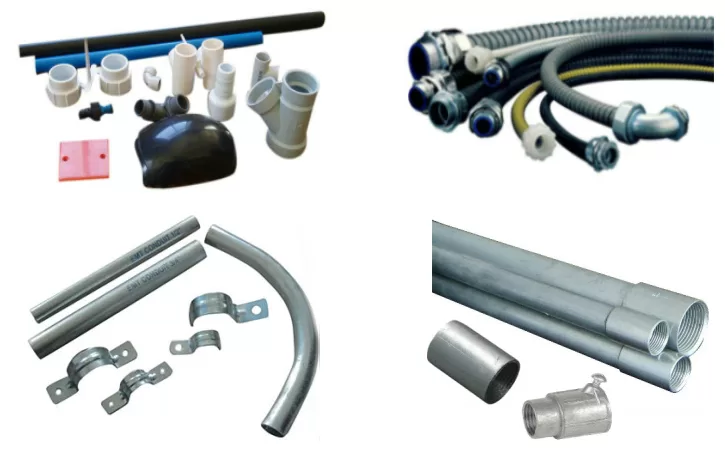
Electrical-conduit-fittings-and-accessories

Gahzly Complete Guide to Types of

Electrical Pipes and Their Functions 2023

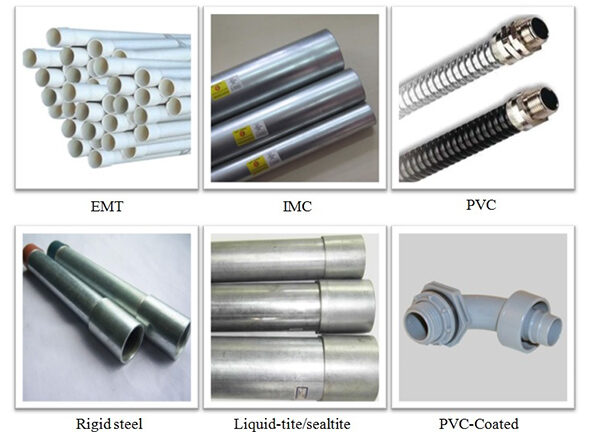
 Types of electrical conduits

  • PVC pipes
  • Rigid PVC Pipes
  • EMT Pipe Fittings
  • RMC Pipes
  • IMC Pipes
  • RGS Pipes
  • Flexible Metal Conduit (FMC)
  • Liquidtight Flexible Metal Conduit (LFMC)
  • Liquid Airtight Flexible Non-Metallic Conduit (LFNC)
  • Non-metallic electrical conduit (ENT)

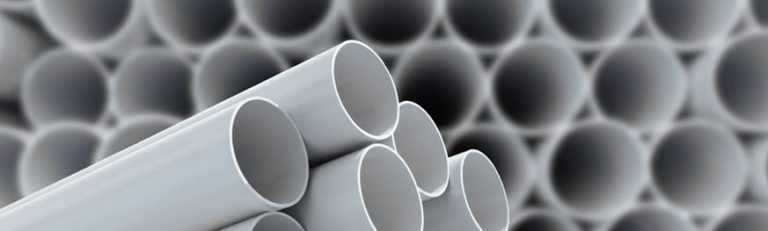
PVC pipes
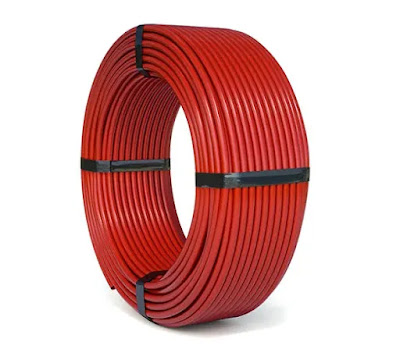
PVC pipe
  • PVC stands for (Polyvinyl Chloride)
  • It contains plastics so it is very flexible and easy to adapt
  • It is the lightest and cheapest type of conduit compared to other types of electrical conduit
  • PVC pipes are only for use embedded in concrete or walls
  • The plastic material makes the tube resistant to any moisture
  • They can simply be bent using special heat tools in the field


Rigid PVC Pipes


Rigid PVC channels


  • It looks like a plastic plumbing pipe but is thinner than it.
  • It can be bent to change direction using a portable heater box.
  • Rigid PVC pipe is installed using plastic fittings that are glued together so that the raceway can be weatherproof making Rigid PVC pipe suitable for external and direct burial in ground applications
  • It can be installed in concrete, in outdoor and underground applications.
  • It is also ideal for use in dry and corrosive locations.
  • Available in various sizes, the smaller sizes are installed in concrete within ceilings and walls or exposed on ceilings or walls but the larger sizes can be installed underground between buildings and structures to allow installation of power and communication cables.


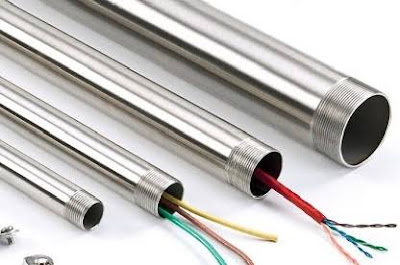
EMT Pipe Fittings
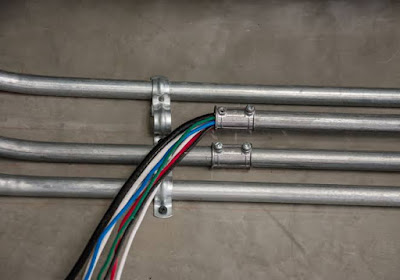
 

EMT channels
EMT Pipe Fittings 


  • EMT stands for Electrical Metal Conduit.
  • This type of pipe is usually made of galvanized steel or aluminum coated steel
  • It is light weight, thin-walled tube and less expensive compared to GRC tubes
  • It is used for the installation of electrical conductors in both exposed and hidden works
  • It is more commonly used in commercial and industrial buildings than in residential applications
  • It is commonly used for running exposed indoor wiring in commercial and industrial buildings
  • This type of pipe can be used in wet locations, in concrete, or even in direct contact with the ground, provided that all pipes and accessories are covered with corrosion-resistant materials.
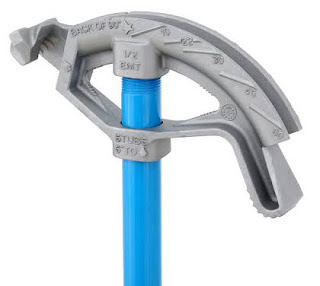
  • It is a rigid pipe but can be bent with a simple tool called a pipe bender in case it needs to be changed direction
  • It is best known for its use to protect fire alarm system cables in exposed installations above suspended ceilings
  • EMT pipe is internally coated with organic insulation which makes it smooth so that it is easy to pull wires inside.
  • EMT is available in many popular sizes from 1/2″ to 4″.
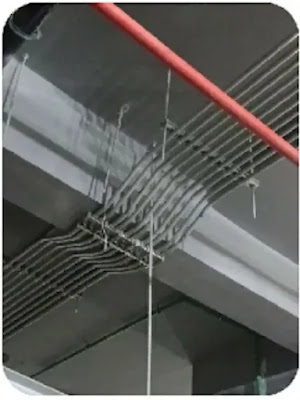
  • EMT shall be supported at intervals of no more than 10 ft (3.0 m), and within 3 ft (900 mm) of each “outlet box, fitting, appliance box, cabinet, pipe body, and other pipe ends) and a strap must be used within 3 ft (900 mm) from each coupling.
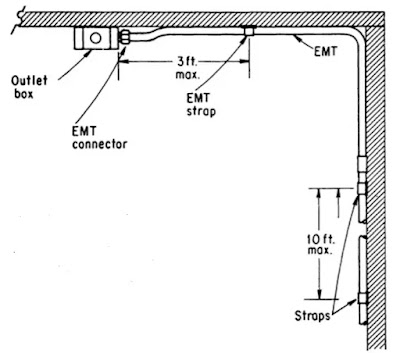
 

Supports EMT channels


  • The maximum number of bends in the EMT pipe from one wire draw point to another shall not exceed four 90° bends or the equivalent of 360°
  • An EMT can be used as an equipment grounding conductor.

RMC Pipes 

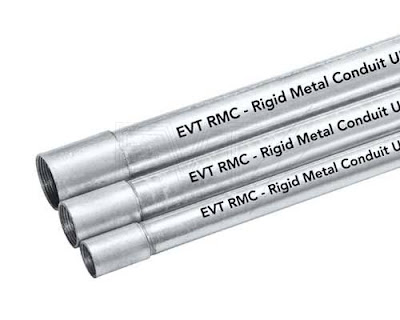
RMC channels


  • RMC stands for (Rigid Metallic Conduit)
  • These are thick tubes made of galvanized steel or anodized aluminum
  • It is one of the heaviest and thickest metal pipes, and it can be covered with a zinc sheath from the inside and outside, and covered from the outside with a non-carryal material such as PVC, and it has a grilled tooth.
  • These pipes can be used indoors, outdoors, underground, and also hidden or exposed
  • RMC pipe fittings are used in dry, wet and corrosive locations

IMC Pipes

 
IMC Channels


  • IMC stands for Intermediate Metal Conduit.
  • This type of conduit is lighter than RMC, heavier than EMT, one-third thinner than RMC, and thicker than EMT.
  • It can be used in the same applications as the RMC
  • The outer layer of these pipes is coated with a layer of zinc and the inner layer is covered with an organic shock-resistant layer
  • RMC pipes are threaded on both ends so that they can be connected to other pipes
  • These pipes cannot be bent, so elbows are available ready for them
  • IMC pipes can be considered (exposed visible) which are installed visually not buried in concrete or walls but can be seen in offices and workplaces.


RGS Pipes


RGS channels


  • RGS stands for (Rigid Galvanized Steel)
  • It is the thicker and heavier steel pipe that is used in indoor, outdoor, underground, concealed and exposed applications.
  • RGS pipes are resistant to rust and chemical reactions, so they are frequently used in places where gases are abundant and places near water.
  • It is considered one of the most expensive types of pipes and is mainly used on suspended ceilings and in exposed electrical installations in electrical and mechanical rooms, some laboratories, bathrooms and wet areas.

Flexible Conduit (FC)

There are three types of flexible conduit as follows:

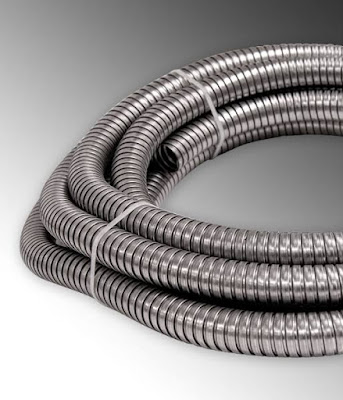
Flexible Metal Conduit (FMC)

Flexible metal ducts


  • They are very flexible conduits due to their spiral construction
  • It has a soft inner layer that makes it easy to pull wires inside.
  • FMC pipes can be bent very easily without the use of any special bending tools
  • It is very easy to install on site without the need for elbows, couplings or any other fixtures
  • Primarily used in dry indoor locations where it is difficult to install rigid metal conduits or where an excessive number of fittings are required to use rigid connections.
  • FMC conduits are used extensively above suspended ceilings to carry branch circuit conductors from the junction box to the hot-wire compartment of lighting fixtures.
  • When used on suspended ceilings, it should be no longer than 6 feet (1.8 m)
  • It is also used to carry wires for a short period of time from a wall box to a motor or stationary device
  • FMC pipes should not be used underground (directly buried or in a buried culvert), embedded in poured concrete or aggregate, or in direct contact with the ground.
  • FMC pipes should not be used in places subject to corrosive conditions, nor should these pipes be installed in direct contact with masonry in wet locations.
  • FMC tubing can be ideally used with vibration equipment such as air conditioning units.
  • NEC specifies that straps or other means of supporting these pipes in place should be used every 4.5 feet (1.4 m) and within 12 inches (300 mm) of each end.
  • NEC specifies that FMC conduits with a circulation size of 1.25″ (35) or smaller, installed with an overall length of no more than 6 feet (1.8 m) and terminated in fixtures screened for grounding, and such conduits may be used for grounding when used to carry circuits rated 20 amps or less .
  • FMC pipe fittings are available in sizes (3/8″, 1/2″, 3/4″).

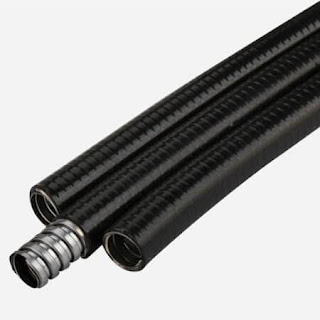
Liquidtight Flexible Metal Conduit (LFMC)


Liquidtight flexible metal ducts


  • LFMC pipes are similar in construction to FMC pipes but are covered with an outer jacket of a thermoplastic material that makes them water and oil resistant and provides protection against most liquids, sunlight, acids, steam and impact/crush.
  • LFMC pipes are made with an inner core of galvanized steel that makes them stronger and less prone to warping and provides mechanical protection for the conductors or wires installed inside. 
  • LFMC pipes can be used exposed or concealed and can also be used for direct burial in the ground.
  • It is suitable for use in wet and damp locations.
  • LFMC conduits are also used with outdoor equipment as an example to carry wires from the disconnect switch to the outdoor unit of the air conditioner

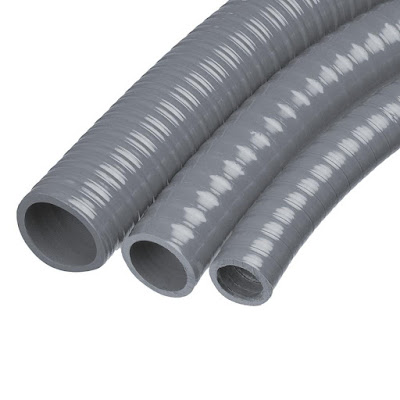
Liquid Airtight Flexible Non-Metallic Conduit (LFNC)

Liquid Airtight Flexible Non-Metallic Conduit (LFNC)
  • It is constructed with a spiral of rigid PVC reinforcement embedded within a flexible PVC wall
  • LFNC conduits have a smooth inner layer that allows easy wire drawing which makes installation easier, and it has a smooth outer layer that is resistant to sunlight and oil making it suitable for outdoor use.
  • It is lighter than LFMC pipe (about 50% lighter), easier to cut and reduces installation cost. 
  • LFNC conduits do not have sharp edges or protrusions which protect the conductors from any damage.
  • LFNC pipe fittings provide protection against corrosion, steam, acids, oil, liquids, and impact/crush.
  • LFNC pipes can be used exposed or concealed and can also be used for direct burial in the ground.
  • It is suitable for use in applications that require high flexibility such as very narrow areas.
  •  LFNC conduits are used in many applications such as motors, pumps, HVAC, marine equipment, outdoor lighting, and more.

Non-metallic electrical conduit (ENT)


Non-metallic electrical tubes (ENT tubes)
  • It consists of a material that is resistant to moisture, chemical atmospheres, and flame retardant.
  • The ENT can be bent by hand, when installed, to determine the direction and length of the tracks.
  • The pipe fittings used for these pipes are solid and have no bending characteristics.
  • ENT can be used concealed in walls, floors and ceilings providing a thermal barrier with a minimum fire rate of 15 minutes of fire rated slate.
  • ENT can be used or installed over suspended ceilings with a minimum fire rate of 15 minutes.
  • ENT can be used in indoor wet spaces, or in slab above or below grade.
  • ENT may not be used in hazardous locations or direct burial.
  • The ENT may not be used in locations where the ambient temperature exceeds that for which the ENT is rated.
  • ENT must be installed every 3 feet (900 mm) and there is the usual 6 feet (1.8 m) allowance for light fixtures and equipment whips over suspended ceilings.
  • ENT is available in sizes (from 1/2 to 2 inches)
NB :
  • It is necessary to avoid installing single phase cable or single core cable in any type of metallic conduit because the magnetic field generated by the cable will cut the surface of the metal conduit, creating eddy currents in the piping, causing heating of the tube and may cause the cable to overheat or burn , so in single-phase circuits, both the neutral conductor and neutral conductor must be installed within the same piping as the magnetic field generated by the conductors will cancel each other out.
  • For multi-core cables, the magnetic field generated by three phases of the cable will be equal to zero or cancel each other out, resulting in no eddy currents causing the pipes and cable to heat up.


Pipe filling percentage

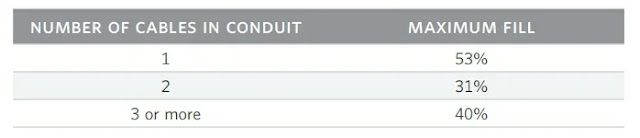
Filling Ratio : It is the ratio between the sum of the cross-sectional areas of all cables to the cross-sectional area of ​​the pipes that contain them.
 
NEC table fill percentage

NEC table fill percentage

Calculate the appropriate piping size according to the cross-sectional areas of the cables

Example : If we have three copper cables, the CSA for each cable is (16 * 4 mm2), then what is the suitable pipe size for these cables?
Solution
 Since the number of cables is more than (2), according to the NEC schedule, fill ratio = 40% Therefore,
CSA for cables = 40% CSA for piping 
π * (D² / 4) = 0.4 * (d² / 4)           
d² = 0.4 * d²    
      d = 1.58 * d   
where d = pipe diameter        
D = sum of cable diameters
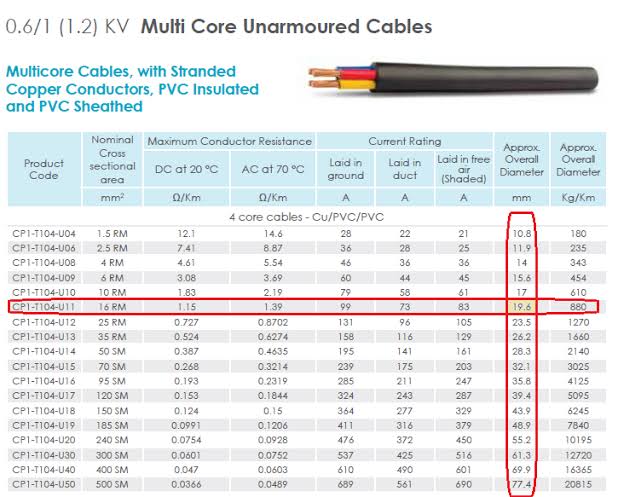
So from the cable manufacturer’s catalog (as below) we can find the outer diameter of the cable (16 * 4 mm2)
 
The filling percentage of the channels
 
From the catalog we find that the outer diameter of the cable (16 * 4 mm2) is equal to (19.6 mm), so
  D = 3 * 19.6 = 58.8 mm        
   d = 1.58 * d                           
 = 1.58 * 58.8 = 92.9 mm
So we can choose 110mm or 4 inch tubes.

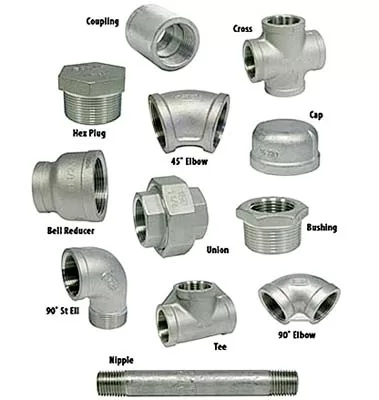
Electrical conduit fittings and accessories

PVC pipe fittings


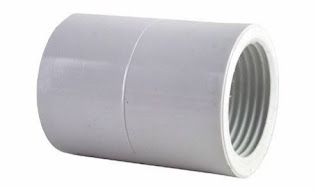
PVC coupling/connectors
A coupling is a short piece of pipe that allows two pieces of pipe mains to be joined together


PVC coupling/connectors
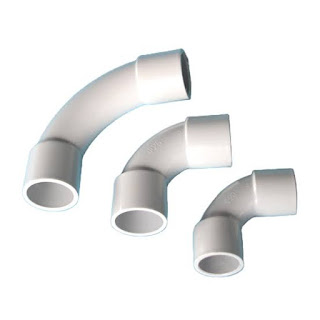
PVC elbow


An elbow is a piece of piping that is fitted between two pieces of the main piping to allow a change of direction of piping or bypass obstructions


PVC elbow
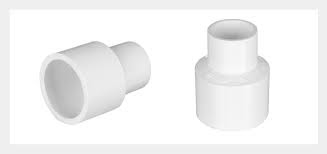
PVC reducer


A reducer is a short piece of pipe fitting that allows two pieces of pipe mains of different diameter or size to be joined together.


PVC reducer


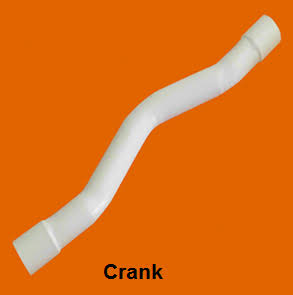
PVC crank


It is used to connect two pieces of pipe with an obstacle between them or to cross other pipes in the same level


PVC crank
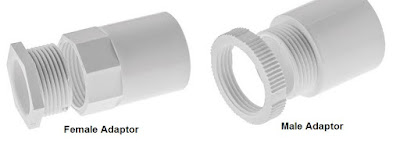
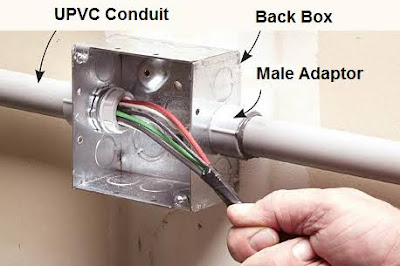
PVC male/female adapter
A male/female adapter is used to connect the piping to the electrical back box or junction box
PVC male/female adapter
 
PVC saddle
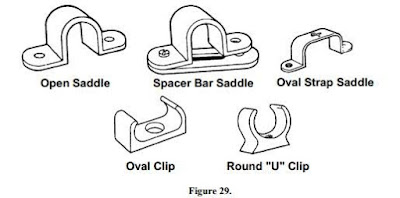
Saddles are used to fix pipes to walls or ceilings. There are many types of saddles such as: 
– Spacer bar saddle 
Open saddle or harness 
– Spring saddle or U clip 
– Oval section saddle 
– Oval belt saddle
PVC saddle
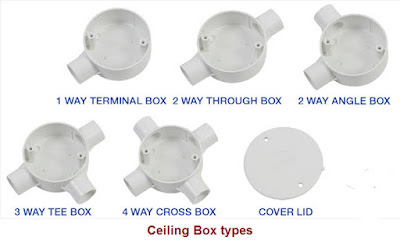
Plastic roof boxes
These are the boxes that are used to connect wires to ceiling light fixtures
Plastic roof boxes
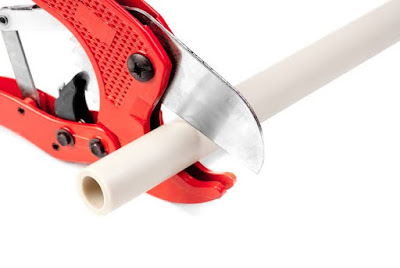
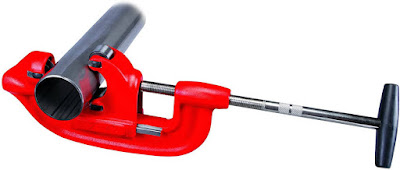
PVC pipe cutting
The pipes are cut using a special cutter to make the cutting place without sharp edges that may injure the wires when pulled inside the pipes. 
 
PVC channel cut


Metal pipe fittings

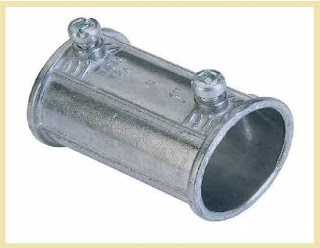
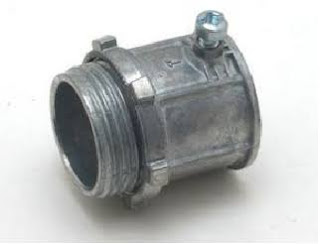
Metal coupling/connector
The coupling is used to connect two pieces of metal tube to be joined together and two pieces of tube are connected to both ends of the coupling through two bolts.


Metal coupling/connector
Metal pipe elbow
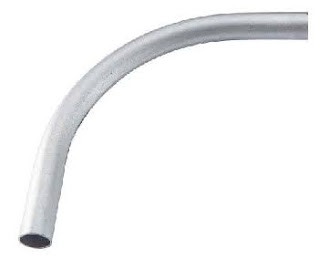
The elbow is used to allow the direction of pipe obstructions to be changed or bypassed. Two pieces of pipe are connected to both ends of the elbow through two bolts. 
Conditional metal elbow


Sometimes readymade elbows are not used but the elbow is made in the field using a Conduit Bender which is used to bend the pipes according to the required angle in the field


Gahzly Complete Guide to Types of Electrical Pipes and Their Functions 2023
Male/female metal adapter
The adapter is used to connect the piping to an electrical outlet box and has two ends, one end is connected to the piping using a screw and the other end is connected to the electrical box using a nut.
Male/female metal adapter
Metal pipe crank
 
Metal channel crank
Cut metal pipes
 
Metal channel cutting


Metal expansion box
In-wall conduit (using UPVC piping) can be converted to bare piping (using EMT or RGS) using the expansion box as shown


Metal expansion box

 Types of electrical conduits

  • PVC pipes
  • Rigid PVC Pipes
  • EMT Pipe Fittings
  • RMC Pipes
  • IMC Pipes
  • RGS Pipes
  • Flexible Metal Conduit (FMC)
  • Liquidtight Flexible Metal Conduit (LFMC)
  • Liquid Airtight Flexible Non-Metallic Conduit (LFNC)
  • Non-metallic electrical conduit (ENT)

Types of Electrical PipesGahzly website to buy electrical pipes and hoses

When we say Gahzly website, we are talking about one of the most famous Arab websites, which was able in a very short period of time to achieve a very high demand for purchases from it by people from different parts and sectors of the Arab world.

On the Gahzly site, you will find electrical pipes and hoses, and all the products that you may need in your home, starting with those for kitchens or bathrooms, but even those for gardens. You will find them in this wonderful site

So, if you were lost before and you don’t know where to go in order to buy your products on the Internet, now you have the perfect solution, and you only have to go to the Gahzly website and start choosing the products you want.

LED strip connectionWhat are the features of Gahzly for buying electrical pipes and hoses?

Since we are talking about a site that is preferred by many people around the world, there is no doubt that it is a site full of various features and characteristics, and for this we have decided to dedicate our next paragraph in order to indicate the most prominent features of the Gahzly site.

Among the most prominent features of the site, we find that there is proportional prices. On the Gahzly website, you do not have to worry about the imaginary prices of products, as is the case with most sites that display their products on the Internet.

The price of product delivery is very reasonable and not expensive, just as the site accepts delivery to various countries, without forgetting that it accepts free shipping on some products.

Among the advantages of the site, we also find that there is the high quality of its products, as it is impossible to find a poor-quality product. Rather, the Gahzly website deals with major companies, Philips, for example, and other famous brands, so you have to remove from your mind the idea of ​​poor quality of one of the products.

Also, one of the advantages of the site is that it does not specialize in one type of product, but rather you will find various types of products on it, for example, electrical appliances, hand tools, mechanical devices, paints, packages for establishing apartments and many other types.

Gahzly also accepts what is known as the shopping cart, which makes it easier for you to filter the products you want to buy and put them in one package in order to be able to pay with the click of a single button.

Multiple payment methods are accepted.

electrical circuit components

Types of Electrical Pipes

We are pleased to have you visit our pages on social networking sites, where we publish exclusive offers on our website.

Our Facebook page  here .

Our Twitter account  here .


Leave a Reply